Photography courtesy of Lowell Washburn, all rights reserved.
November is a month of intense migration. A time when high winds and, maybe even the season’s first snow squalls, send northern holdouts winging for the wintering grounds. But not all autumn migrations occur in the skies. Some happen on land.
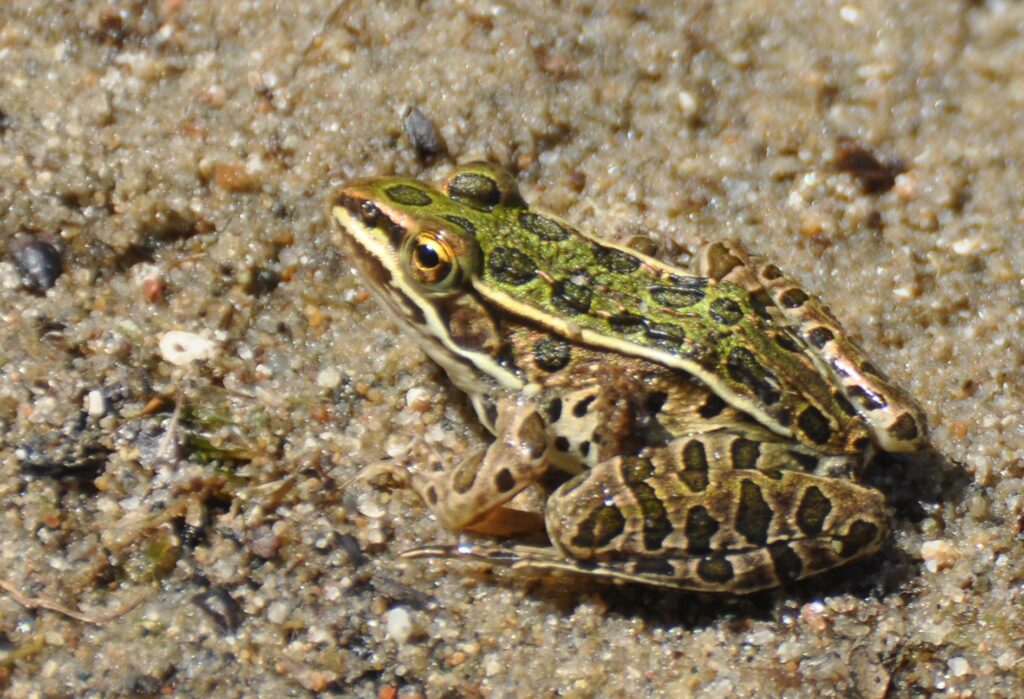
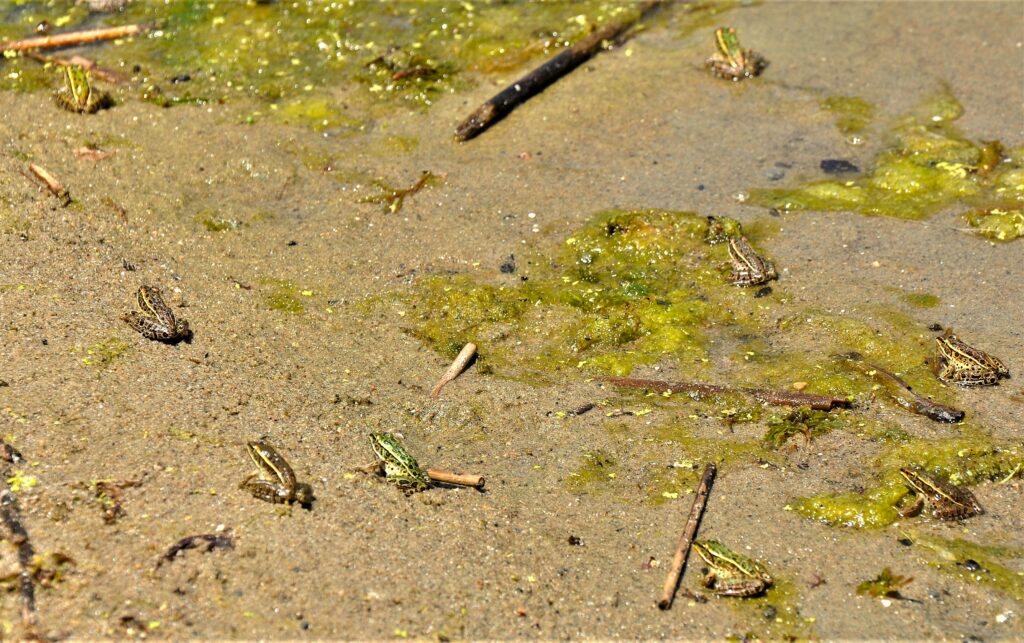
In Iowa, the most dramatic of these fall land movements are conducted by a most unlikely class of wildlife – the amphibians. The most familiar to most folks is the annual, early season migration of leopard frogs. After spending the late summer in boggy pastures or grassy uplands, entire frog populations suddenly decide it’s time to move to winter quarters. Although no one can say what triggers the precisely timed event, it does appear that each and every leopard frog has simultaneously received the memo that it’s time to move. The migration begins at nightfall as frogs – often in wholesale numbers — began to funnel toward traditional winter wetlands. As is the case with winged travelers, the migration trail is fraught with danger. At favored road crossings, mortality runs high as pavements becomes littered with dozens – sometimes hundreds – of crushed frogs.
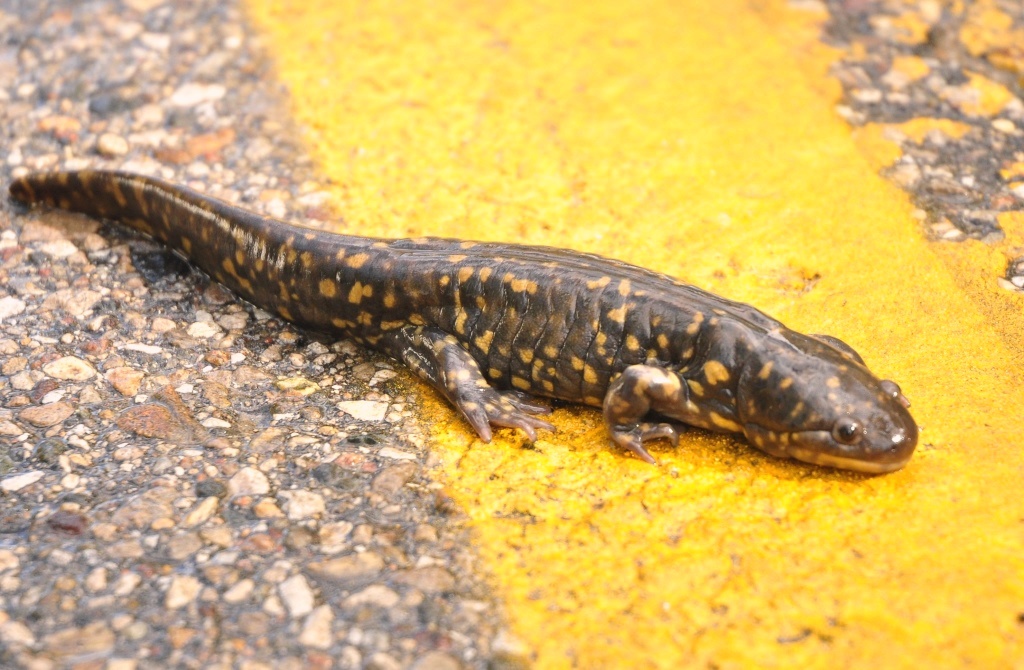
Equally dramatic, though perhaps less well known, are the annual migrations of the tiger salamander. Spending most of the warm weather months in underground burrows, the tiger salamander is one of Iowa’s most widespread, abundant, and yet seldom seen amphibians. They are also one of the hardiest. First to emerge from winter hibernation, I’ve observed salamanders making their way across the last melting snowdrifts as they head to spring breeding ponds. In late fall, I’ve seen them crossing blacktop roadways long after other species have gone to bed for the winter.
Some ‘tiger’ migrations are more spectacular than others. In Iowa, the Granddaddy of them all occurs at Tama County’s Otter Creek Wildlife Area where migrating salamanders sometimes move in mind boggling profusion, prompting the temporary closure of County Road E66 while while the amphibians cross the asphalt.
 Susan Judkins Josten
 Rudi Roeslein
 Elyssa McFarland
 Mark Langgin
 Adam Janke
 Joe Henry
 Sue Wilkinson
 Tom Cope
 Kristin Ashenbrenner
 Joe Wilkinson
 Dr. Tammy Mildenstein
 Sean McMahon