Photography courtesy of Lowell Washburn, all rights reserved.
As many of you already know, Thanksgiving is one of my favorite holidays. I love the big family gatherings. I love getting together with friends. I love the traditional foods — roast turkey, homemade dressing, cranberry salads, and that thick slice of pumpkin pie to top it all off.

Based on Pilgrim diaries, the first Thanksgiving occurred in 1621 when, following a bountiful harvest, the early colonists united with Wampanoag natives for a three day feast at what is now Plymouth, Massachusetts. Anticipating a large crowd, the Pilgrims had dispatched an advance hunting party which returned with an enormous bag of wild ducks, geese, swans, and other ‘miscellaneous fowl’. In addition to pumpkins, squash, and a variety of unspecified wild edibles, the Wampanoags also contributed fresh venison after arrowing five white-tailed deer, according to diary accounts.
Although turkey has become synonymous with modern Thanksgiving feasts – nearly 90 percent of Americans eat turkey on Thanksgiving — it remains unclear if turkey was actually served at that first fall festival. While the early colonists made reference to the wild turkey’s ‘plentious abundance’, there is no specific mention of the bird being included in the three day celebration. But with the turkey already being a favored menu item of both colonists and native Americans, it’s hard to imagine that at least of couple of gobblers didn’t find their way to the dinner table.
This year, I’m on deck to partake of four separate Thanksgiving dinners. All of those dinners will feature roast turkey as its centerpiece. And although I help with a few odds and ends, my biggest responsibility is to supply a wild turkey for the fourth and final meal. A question that I’ve often been asked by apprehensive, non-hunting friends is, “What does wild turkey taste like. Is it good to eat?” I just tell them that it tastes a lot like turkey. So much so, in fact, that I doubt, if given a blind taste test, there is anyone who could detect the slightest difference in flavor between a wild bird and its domestic cousin.
Supplying a fresh-from-the-woods wild turkey is not without challenge. Sharp eyed and wary, wild turkeys rarely come easy. For me, it’s easier to tag a deer than it is to collect a fall turkey. Last year, I didn’t anchor a gobbler until November 30. Although this was a bit after the official Thanksgiving holiday, it was still in time for our final celebration.
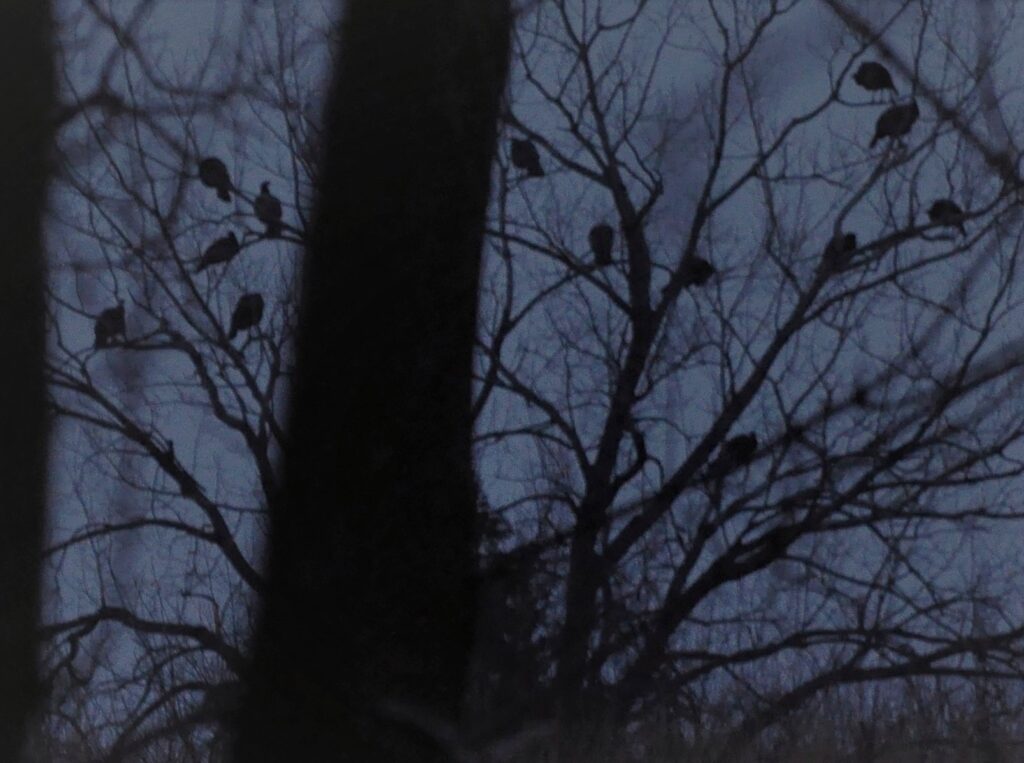
By contrast, this year’s bird came easy, as in ridiculously easy. I began the hunt by popping up my blind in the pitch dark. Although I didn’t realize it at the time, a large flock of turkeys was roosted less than 200 yards away. I remained unaware of their presence until the first birds began sailing out of the tree when it was still half dark. After reassembling on the ground, the birds went into huddle and sat like giant lumps of coal for the next thirty minutes or so. Once it was full daylight, the turkeys began to forage. Scratching their way in my direction, the flock soon became increasingly interested in my single decoy – a newcomer they did not recognize.
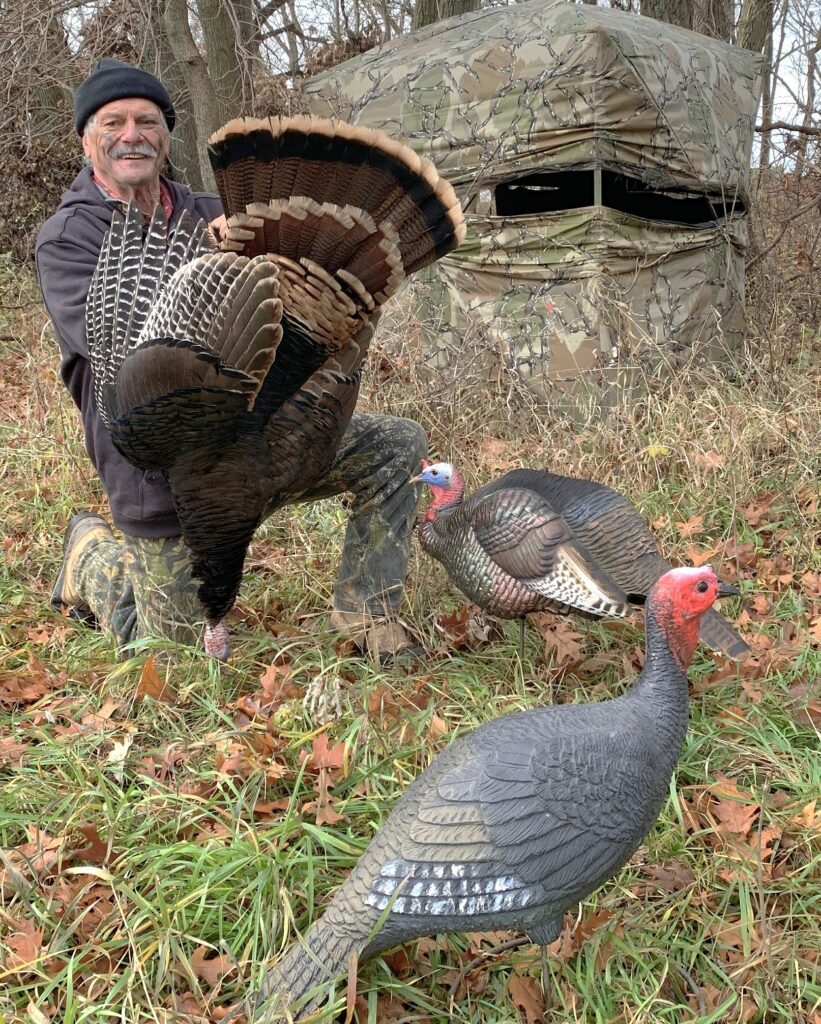
The birds kept coming and, in almost less time than it takes to tell, I had the entire flock standing at distances ranging from 5 to 15 yards. Picking the bird that appeared to be my best shot, I slowly drew the longbow and sent my arrow on its way. The arrow struck home and my Thanksgiving turkey was in the bag. From the time the birds began foraging until I loosed the arrow was probably ten minutes, maybe less.

Have I mentioned how much I love Thanksgiving? Have a great holiday!

 Susan Judkins Josten
 Rudi Roeslein
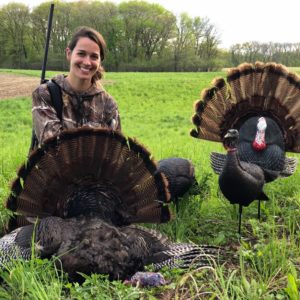 Elyssa McFarland
 Mark Langgin
 Adam Janke
 Joe Henry
 Sue Wilkinson
 Tom Cope
 Kristin Ashenbrenner
 Joe Wilkinson
 Dr. Tammy Mildenstein
 Sean McMahon