
Photography courtesy of Lowell Washburn, all rights reserved.
Spring and fall migrations are a dangerous time for traveling songbirds. This fact was rarely more evident that when winter storm Iona rolled into Iowa on Sunday, March 15. Accompanied by rapidly falling temperatures, high winds, and dropping nearly nine inches of ‘wintry mix’, the dramatic change in weather was an unwelcome and life threatening event for the thousands of American robins that had previously been lured from their southern wintering grounds by this year’s abnormally warm, springlike conditions.
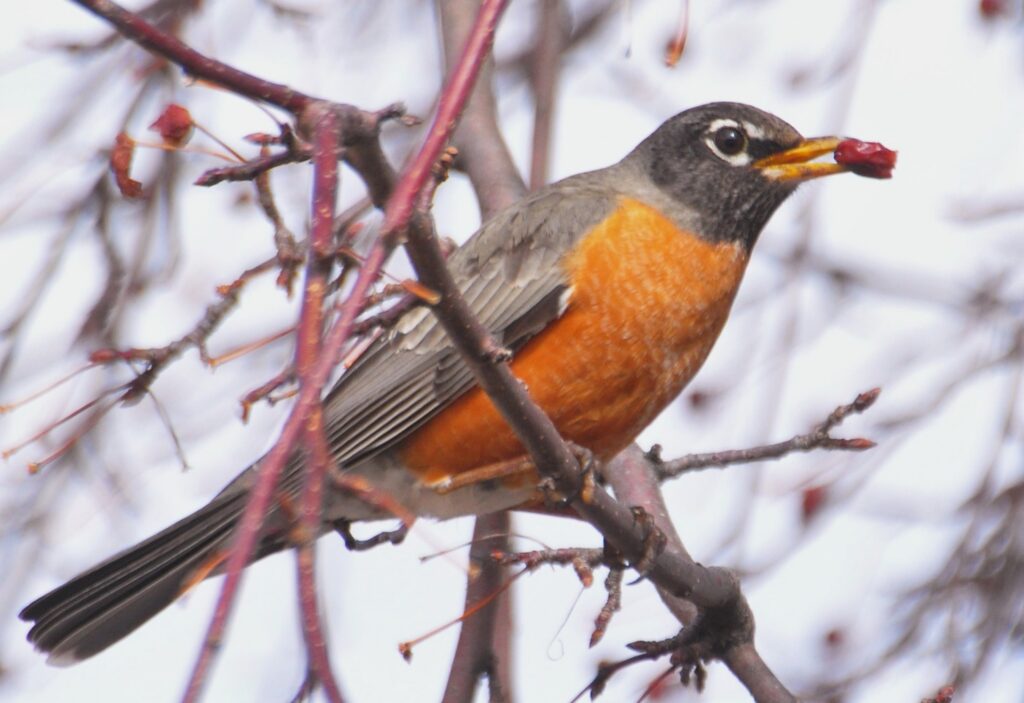
Until now, the early arrivals had been dining on an abundant crop of earthworms which warming temps had also prematurely lured from their winter quarters. But this food source quickly retreated back to their underground tunnels as soon as the weather turned. For robins, and other small birds, surviving the elements was not so simple. Conducting a reverse migration during near blizzard conditions would prove far more dangerous than just hunkering down while hoping to ride out the weather. And hunkering down was exactly what most birds did. By Sunday afternoon, my backyard feeders were busier than they have been for the past month.
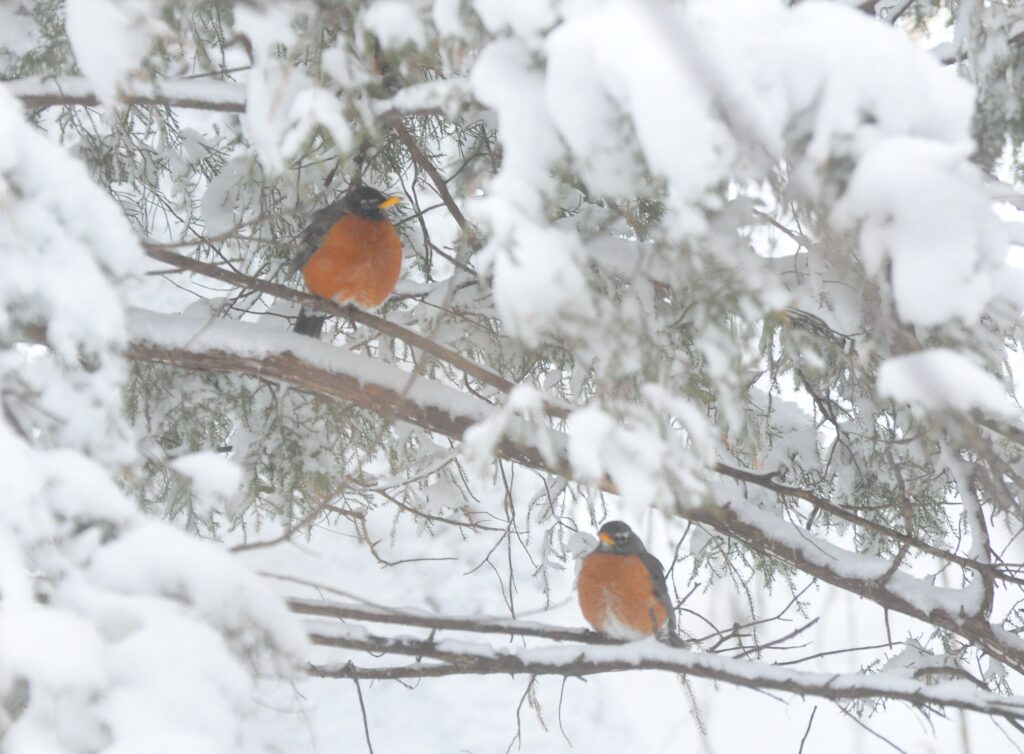
But the real action wasn’t at the feeders but rather along the shore of a small pond located at the edge of my driveway where weather-bound robins were stealing the show. In the absence of moisture laden nightcrawlers, robin flocks have been staving off the cold by foraging on dried fruit including wild grape, chokecherry, and crab apples. And although these carbohydrate-charged foods may be saving their lives, the dried berries also make robins incredibly thirsty – which brings us back to the pond by my driveway.
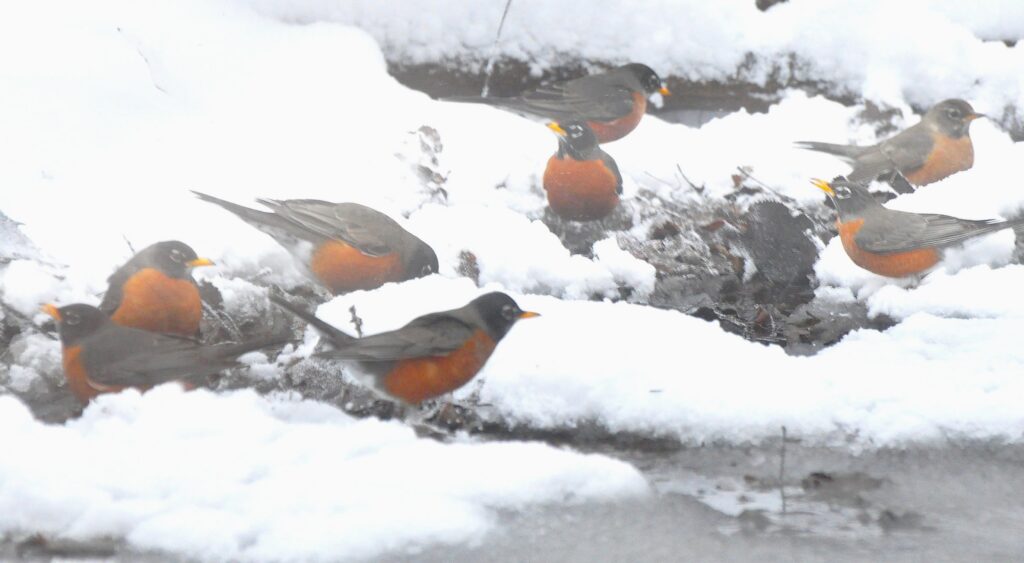
Although most of the pond had refrozen, there were some small shoreline pockets of open water. These tiny oasis were attracting robins by the dozens – a nonstop procession of birdlife descending to drink from the tiny puddles. Most birds would tarry for but for a minute or two before taking wing again – presumably in search of more berries. Others would stay longer, with a few even going so far as to take a quick bath despite the frigid temps and blowing snow.
Since birds were constantly coming and going, obtaining an accurate count was impossible. I did make a couple of attempts, however, counting the birds by fives and then by tens. My best guesstimates were that, during peak concentrations, the tiny puddles were benefiting upwards of 200 thirsty robins — an impressive sight for a pond measuring less than 40 feet in width.

By late April, the little pond will be hosting a variety of northbound warblers and will provide a temporary headquarters for one or two pairs of nesting wood ducks. But as impressive as this show will be, I doubt that anything will match the unique excitement provided by those legions of parched robins that dropped by to quench their thirst during the peak of winter storm Iona.

 Ann Wolf
 Thomas Rinehart
 Susan Judkins Josten
 Rudi Roeslein
 Elyssa McFarland
 Mark Langgin
 Adam Janke
 Joe Henry
 Sue Wilkinson
 Tom Cope
 Kristin Ashenbrenner
 Joe Wilkinson
 Dr. Tammy Mildenstein
 Sean McMahon