
Photography courtesy of Lowell Washburn, all rights reserved.
For Iowa’s archery deer hunting enthusiasts, the best part of the year has arrived. The annual rut has begun. From now until the end of November, those big white-tail bucks we all love will be on their feet and on the move.
One of the activities I most enjoy during the annual rut is calling deer. Although every hunter who pursues ducks, geese, or wild turkeys is well acquainted with the effectiveness of game calling, comparatively few of Iowa’s 60,000 bow hunters employ those same tactics to lure fall white-tails into ethical shooting range. It’s unfortunate that so many hunters are missing out the excitement.
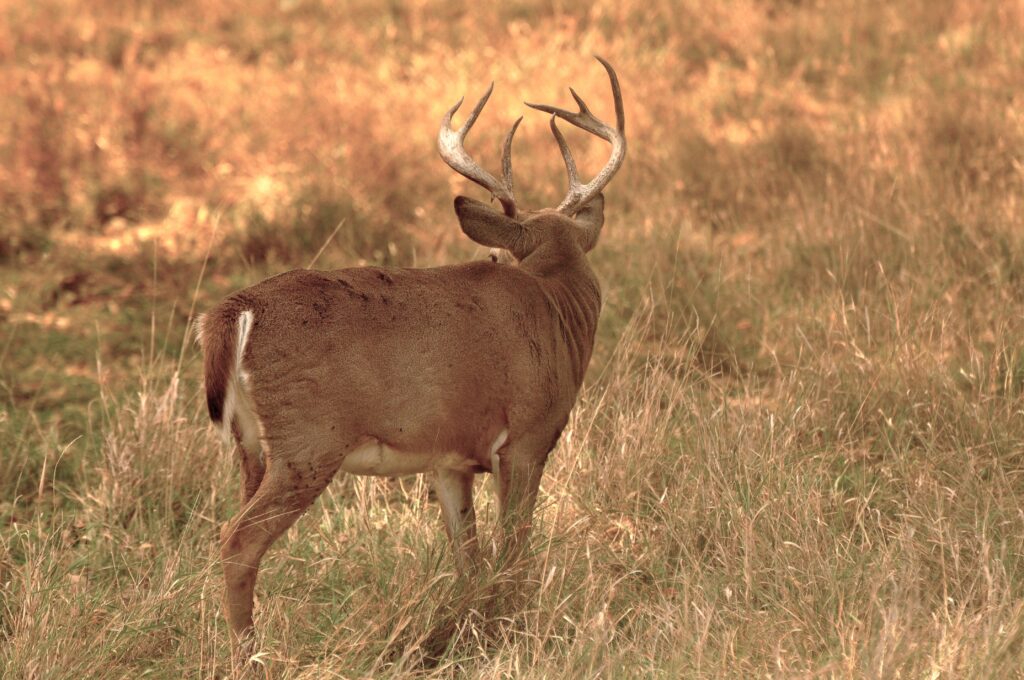
For me, calling is an essential part of spending a day in the timber. To watch a cruising buck suddenly change direction and trot directly to the sound of your call – even when it’s an animal you have no intention of shooting – can add a distinct level of excitement to what would have otherwise been a lackluster outing.
Deer calling employs two basic tools. The first is some type of traditional tube call – somewhat similar to a duck of goose call. The second is a set of antlers for rattling. Both types can be effectively used in conjunction with the other. The idea is to mimic sounds that occur naturally in the wild.

Although there are many so-called snort, grunt and wheeze calls offered on today’s market, the majority of tube-type deer calls are designed to imitate the basic vocalizations of a rutting buck – sounds that closely approximate the contented grunting of a domestic hog. Although there are a wide variety of calls to choose from, I like to keep it simple and have enjoyed my best success with the Steve Griebel Game Calls’ Rut Stopper and Hunter Specialties’ True Talker. Both are affordable, easy to blow calls that provide realistic sounds that will bring bucks to your stand.
You don’t need to be an expert to call in a November buck. What you do need to do is play the wind and apply some common sense to each calling scenario. Regardless of whether I’m in thick cover and trying lure a deer that I haven’t even seen yet or am trying to gain the attention of a deer I’ve spotted at a distance, I always begin with the same basic four note series. For those of you who can still remember the old crank-up, party line wall phones; the calling scenario would be the equivalent of ‘one long, and three shorts’. If that sentence made absolutely no sense to you, ask your white haired Grandma to explain.
Depending on their current frame of mind, bucks of all ages may or may not respond to your call. But once you’ve found a deer that will stop and take notice, you can choose from one of three options. You can simply shut up and see what happens next. You can tone it down and continue to call sparingly. Or you can respond more aggressively and crank up the volume. Your decision will bring immediate consequences: It will either make the deer more curious, make the deer angry and aggressive, or you’ll turn the buck off.
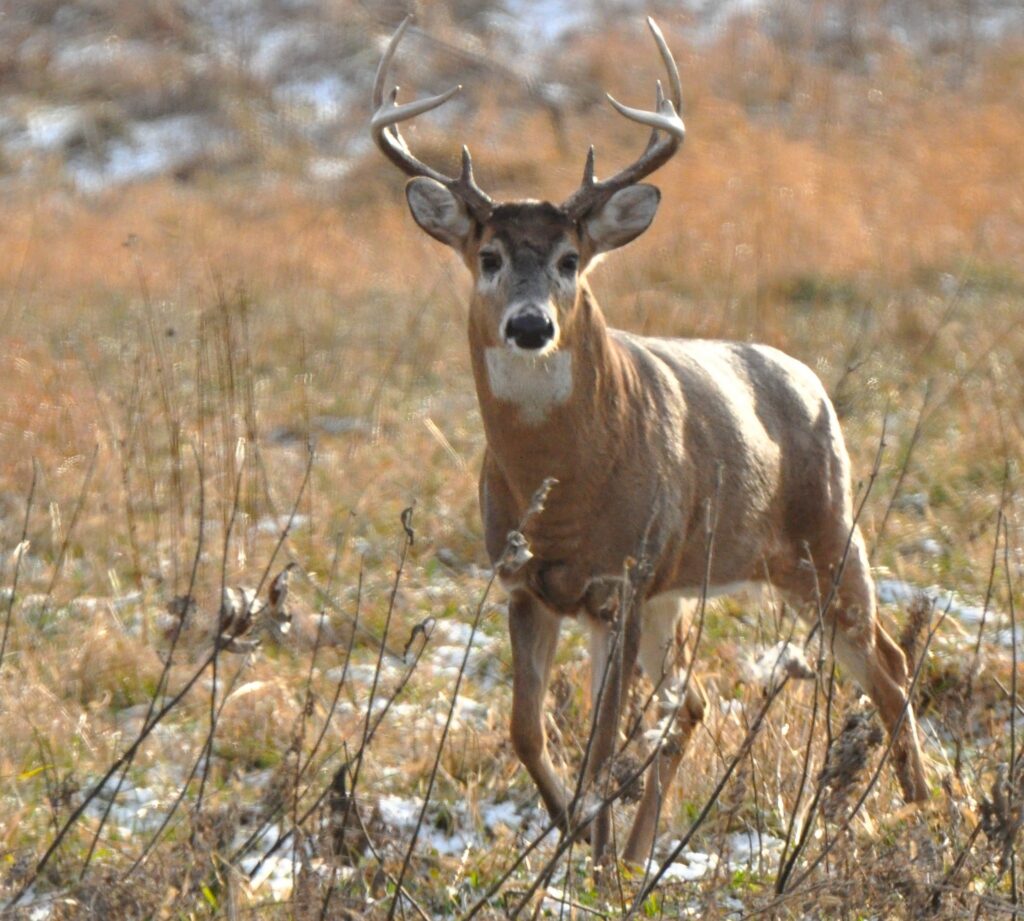
Anger and aggression are the reactions we’re all looking for, of course. Unfortunately, November bucks are as unpredictable as spring gobblers. The same calling sequence that provokes a reckless approach one day, may send the same buck hightailing the next.
From late October through at least mid-November, bucks spend the majority of their day searching for does. Sometimes they encounter rival bucks instead. When that happens, the woodlands resound with the reverberating sound of clashing antlers. When a human hunter attempts to duplicate the sound of battle by clashing and rattling a pair of hand held antlers, the response from nearby bucks can be impressive.
As happens with tube calls, bucks of all ages and sizes may respond to rattling. But while tube calls are relatively limited in range, the vigorous clashing of handheld antlers or hardwood rattle bags can be heard for a much greater distance. In northern Iowa, I’ve been bow hunting on some of the same areas since the early 1970s. One thing I’ve learned during that time is that rattling success greatly varies from season to season. Don’t know why; it’s just the way it is. During the best seasons, deer literally come running. On other years, I can sit in the exact same location, make the exact same sounds, and be ignored. As is the case with most outdoor endeavors, the results usually lie somewhere in the middle of both extremes.
A few years ago, I enjoyed my best ever rattling success by calling in a total of fourteen different bucks to within 10 yards of the only stand I had on the property. Although there were some repeat visitors, I could individually identify the different deer by the shape and size of their antlers. On my most memorable occasion, I simultaneously rattled in three, one-and-a-half-year-old six pointers. The trio converged on my stand from three different directions – with each deer arriving within a minute or two of the others. Crazy!
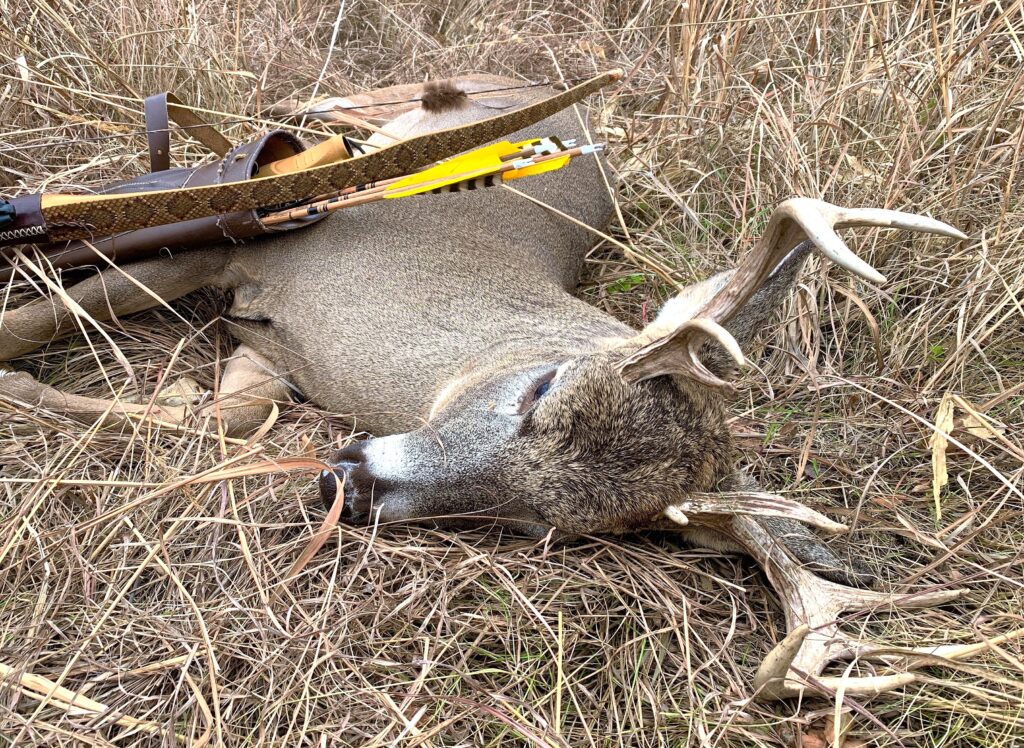
The young bucks had come to watch a fight. After failing to find the battle that never existed in the first place, the disappointed deer sparred among themselves for a bit before casually disappearing back into the woods. I later shot a nice eight-pointer from that same tree, but what I remember most from that season was the sight of those three sleek and beautiful bucks all arriving under my stand at the same time.

 Craig Parker
 Ann Wolf
 Thomas Rinehart
 Susan Judkins Josten
 Rudi Roeslein
 Elyssa McFarland
 Mark Langgin
 Adam Janke
 Joe Henry
 Sue Wilkinson
 Tom Cope
 Kristin Ashenbrenner
 Joe Wilkinson
 Dr. Tammy Mildenstein
 Sean McMahon