
Photography courtesy of Lowell Washburn, all rights reserved.
“A wonderful bird is the pelican. His bill can hold more than his belican”
— Poet, Dixon Merritt 1910
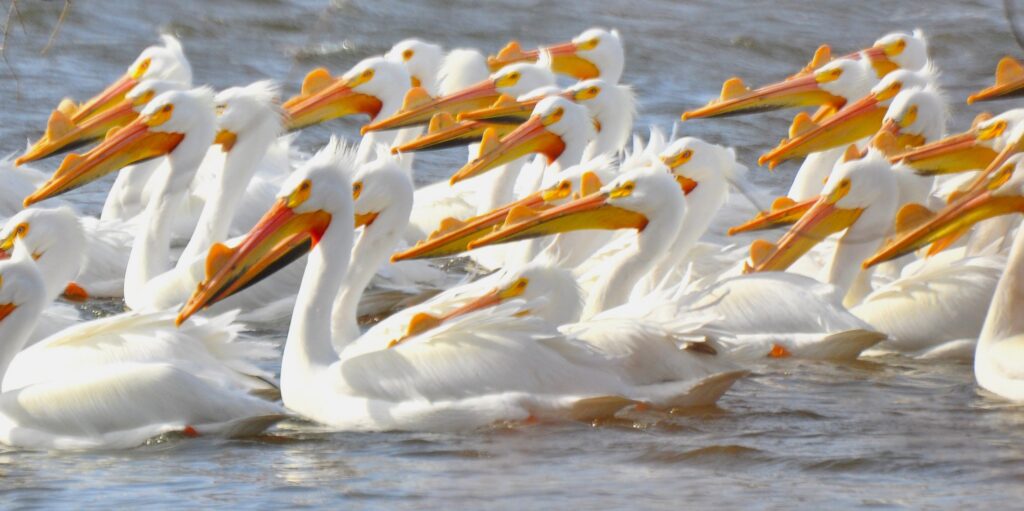
With it’s massive size and nine-foot wingspan, the American white pelican is one of North America’s largest birds. With snow white plumage, jet black wingtips, and outrageously long bill, it would be hard to mistake the pelican for any other species.
Currently enroute to northern summer nesting colonies, tens of thousands of white pelicans are making traditional stops to feed and rest on Iowa wetlands. The greatest concentrations, and some of the best viewing opportunities, can be found on the state’s larger water bodies including Coralville, Red Rock, Rathbun, and Saylorville reservoirs. Large numbers of pelicans can also be found on the Mississippi River at Lock & Dam 14 near Le Claire. In extreme northern Iowa, pelicans traditionally make layover stops at the Iowa Great Lakes, Clear Lake, and on our larger marshlands.
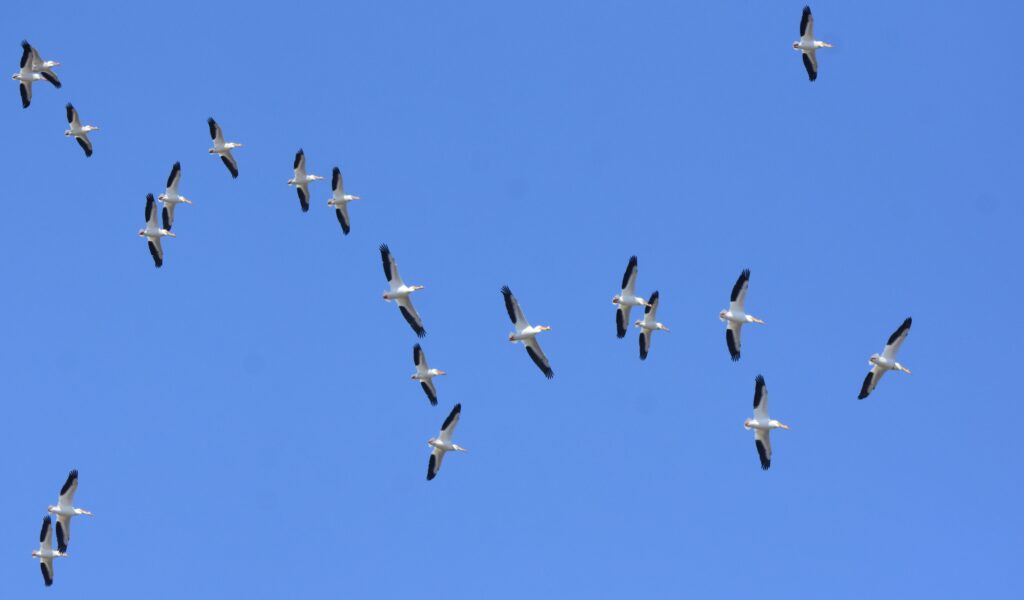
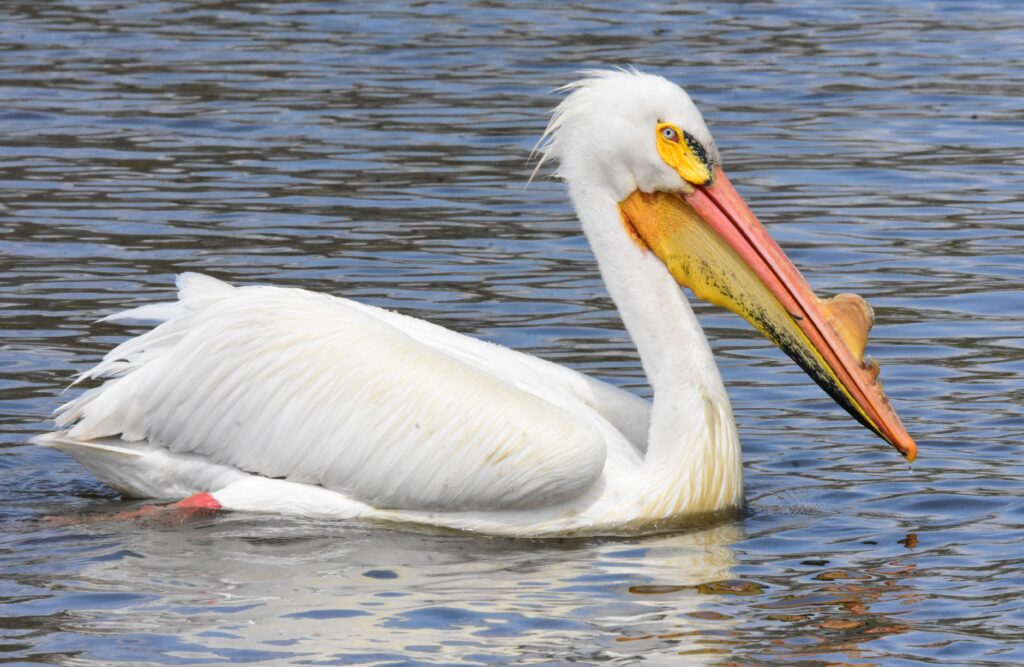
White pelicans are extremely social, spending their entire lives in the close company of others of their kind. White pelicans may begin nesting during their third or fourth summer. Mature birds annually develop a distinctive, flat horn on their upper mandible. The temporary plate is shed at the conclusion of the nesting season. Typically raising just one youngster per season, pelicans prefer to nest on isolated island habitats in colonies that may contain thousands of birds.
The pelican’s gregarious nature even extends to daily feeding when flocks conduct socialized, cooperative fishing expeditions where birds unite to herd fish into compact schools. Once the roundup has reached it peak, the birds rush in to scoop the corralled catch into their huge orange bill pouches.
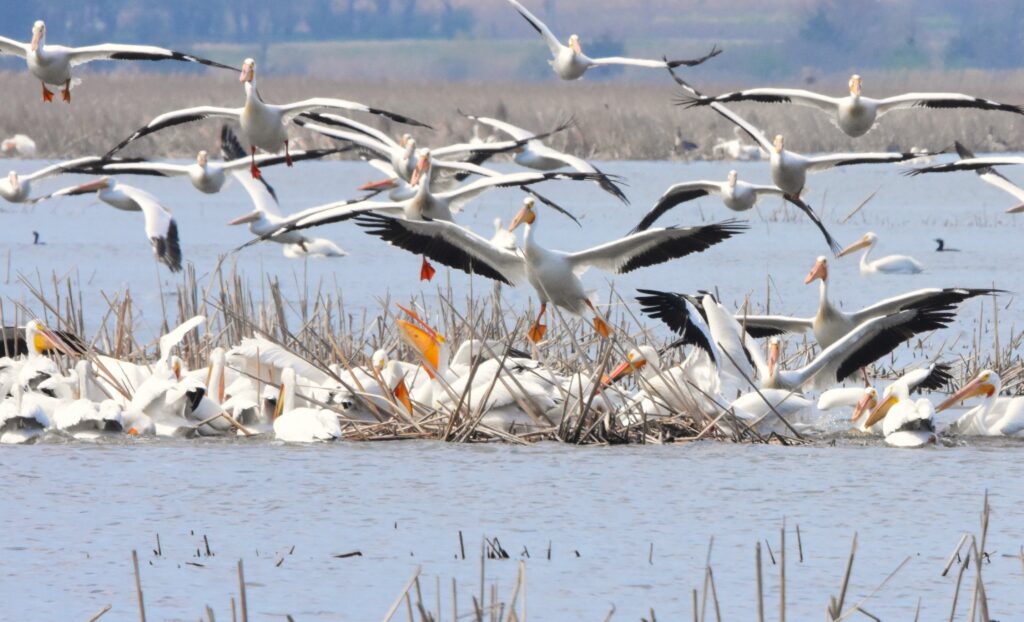
Although fishing may be a cooperative effort, the activity is also individually competitive. If distant birds notice that another flock is having obvious success, they immediately take wing to cash in on the bounty. Upon their arrival, the interlopers have no qualms about crashing into the middle of the party where they quickly take ‘their fair share’ of the fish. Once the feeding frenzies commence, there is no lack of spectacular drama.
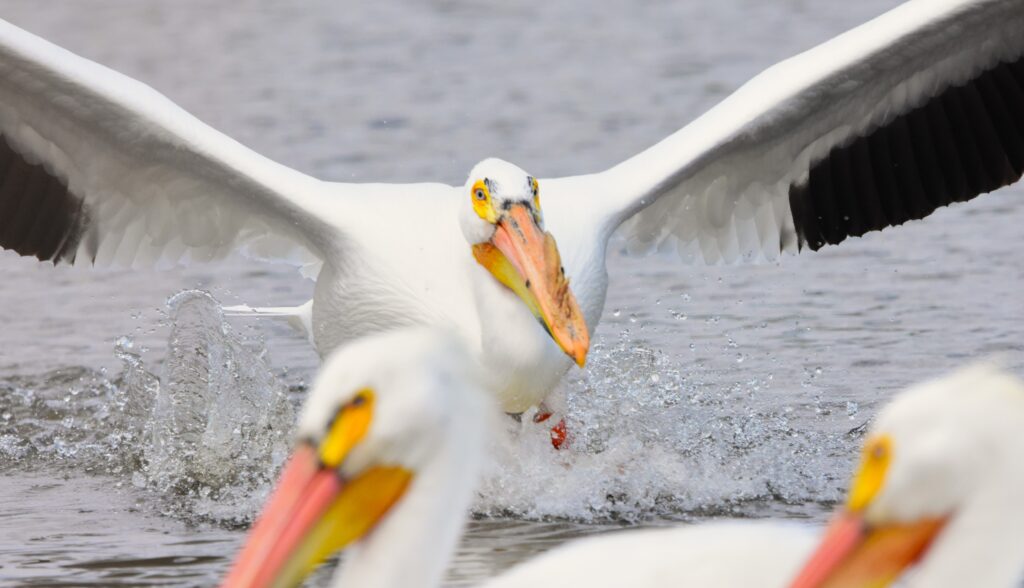
According to avian researchers at Cornell University, the pelican’s huge bill pouch can hold an amazing 20-plus pounds of fish and water. The combined volume represents two to three times the capacity of the bird’s stomach, making Merritt’s catchy, 1910 limerick an absolute fact.

 Craig Parker
 Ann Wolf
 Thomas Rinehart
 Susan Judkins Josten
 Rudi Roeslein
 Elyssa McFarland
 Mark Langgin
 Adam Janke
 Joe Henry
 Sue Wilkinson
 Tom Cope
 Kristin Ashenbrenner
 Joe Wilkinson
 Dr. Tammy Mildenstein
 Sean McMahon