Photography courtesy of Lowell Washburn, all rights reserved.
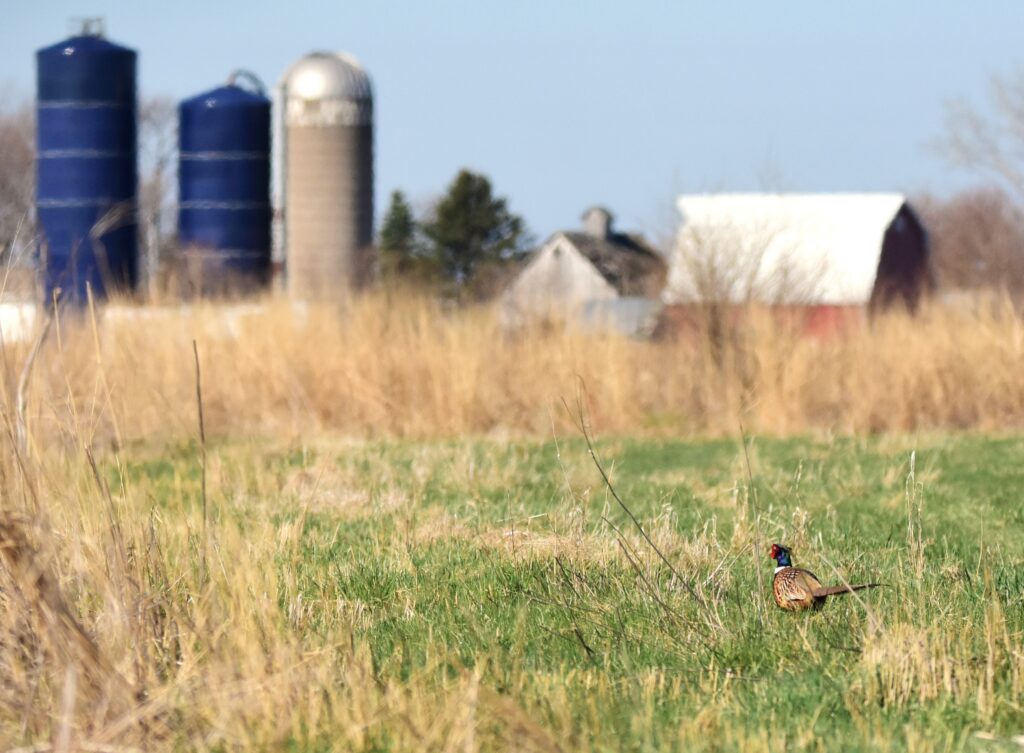
Iowa pheasant hunters are walking in tall clover. Following a series of favorable nesting seasons, Iowa’s pheasant population and Iowa’s pheasant harvest has been slowly inching up since 2015. Last year’s pheasant season was phenomenal. When the results of the 2025 hunter game surveys are completed and released next month, wildlife biologists are anticipating they will reveal the highest Iowa pheasant harvest in twenty years, according to Todd Bogenschutz, Upland Game Biologist with the DNR’s Boone Research Station
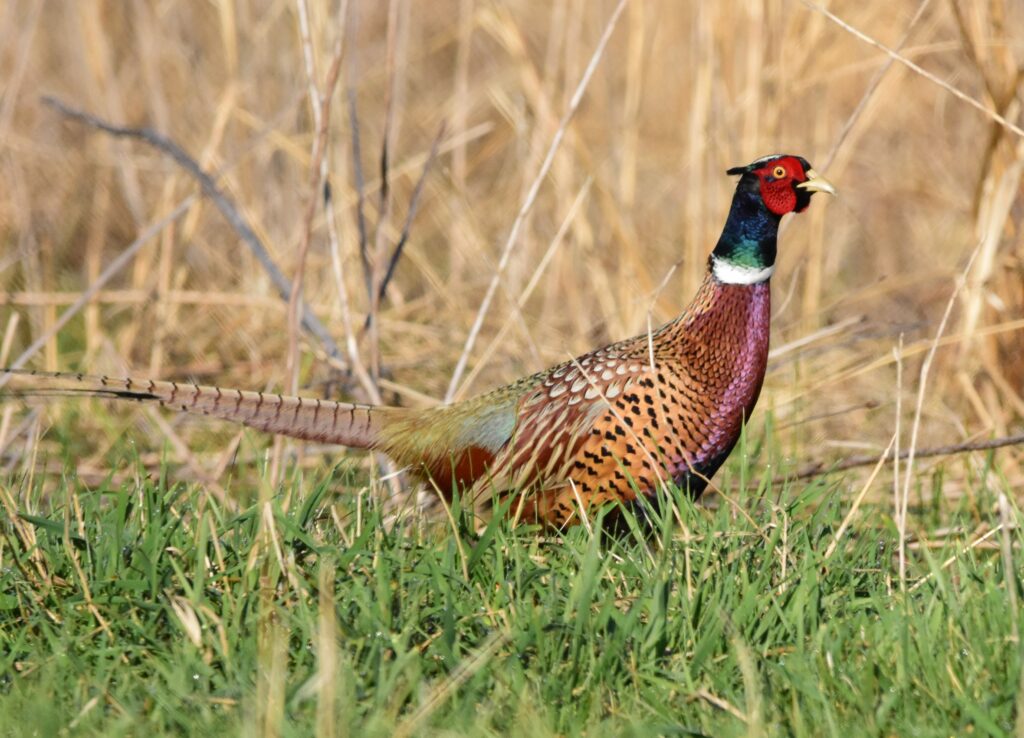
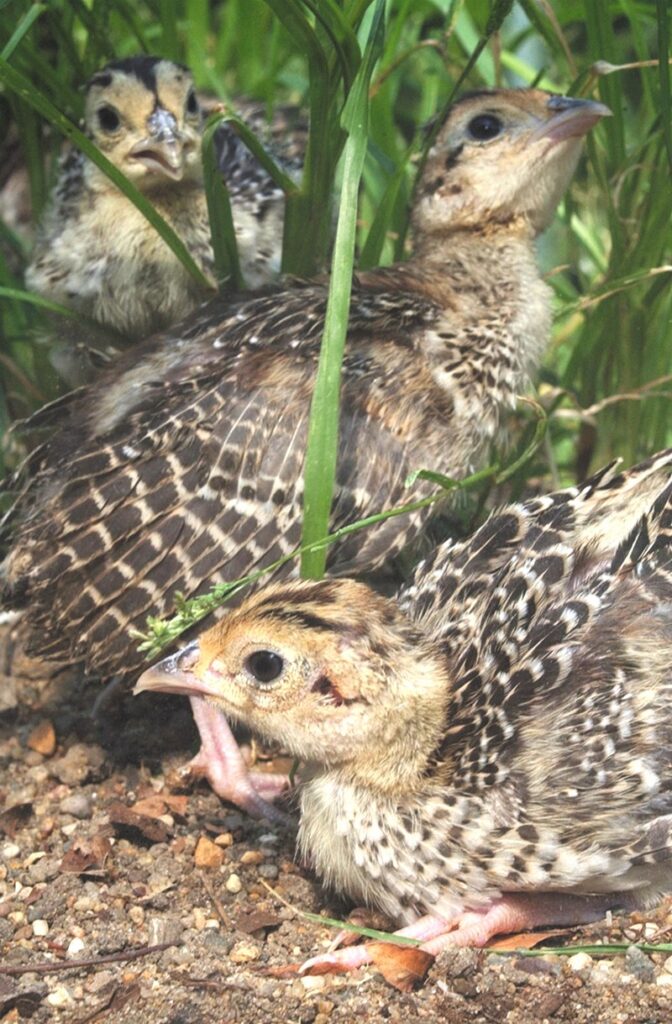
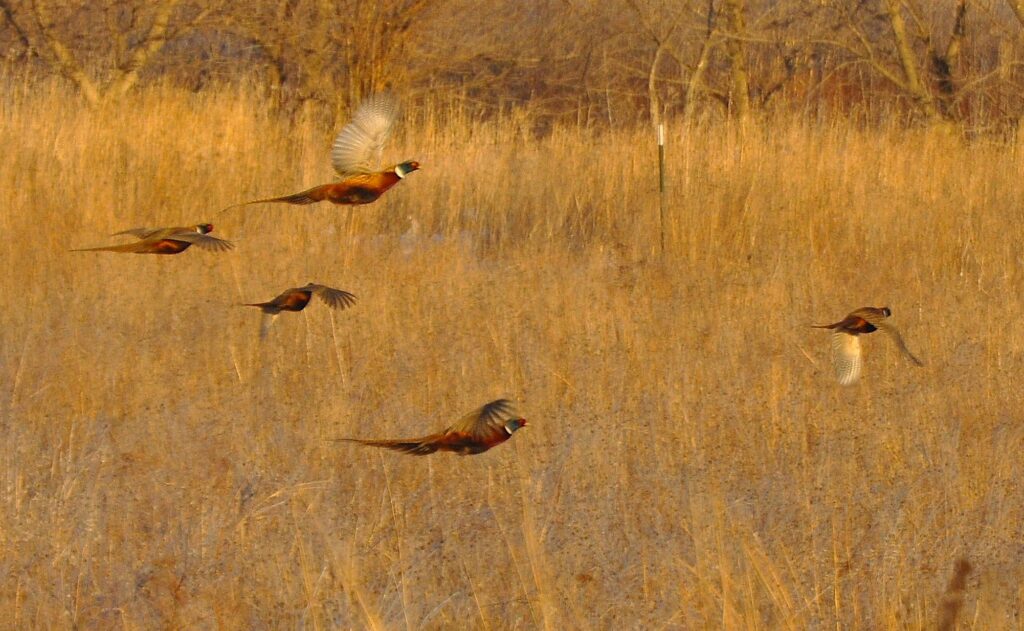
The good news gets even better. Following an exceptionally mild winter during 2025, there has been an excellent carryover of birds into our current nesting season. Colorful roosters can be seen or heard crowing wherever grassland cover exists. Hens are currently tending their nests and, barring catastrophic weather events — such as widespread flooding, we could be looking at a great hatch and another banner pheasant season during 2026. But although everything may seem to be coming up roses today; there are potentially dark clouds on the horizon. The bad news is that future pheasant forecasts may not be nearly as bright as they are today.
Critical to the long-term maintenance of high pheasant populations, Iowa’s Conservation Reserve Program [CRP] grasslands are vanishing at an alarming rate. Acre by acre, vital habitats are being plowed under. The sad reality is that Iowa pheasant populations may be living on borrowed time, says Bogenschutz.
Since 1990, Iowa has lost a nearly unfathomable amount of critical pheasant habitat – CRP, alfalfa, small grains, etc. If all these habitat losses could be assembled into one place, it would be a continuous, ten-mile-wide strip of grassland stretching from Council Bluffs to Davenport. Think about that for a moment. A ten-mile-wide strip of habitat spanning the state! How many pheasants, songbirds, and other upland wildlife species do you think could be produced from a block of habitat like that?
The really bad news is that, despite these overwhelming losses, the bleeding hasn’t stopped. Critical CRP nesting habitats continue to vanish at an accelerating pace.
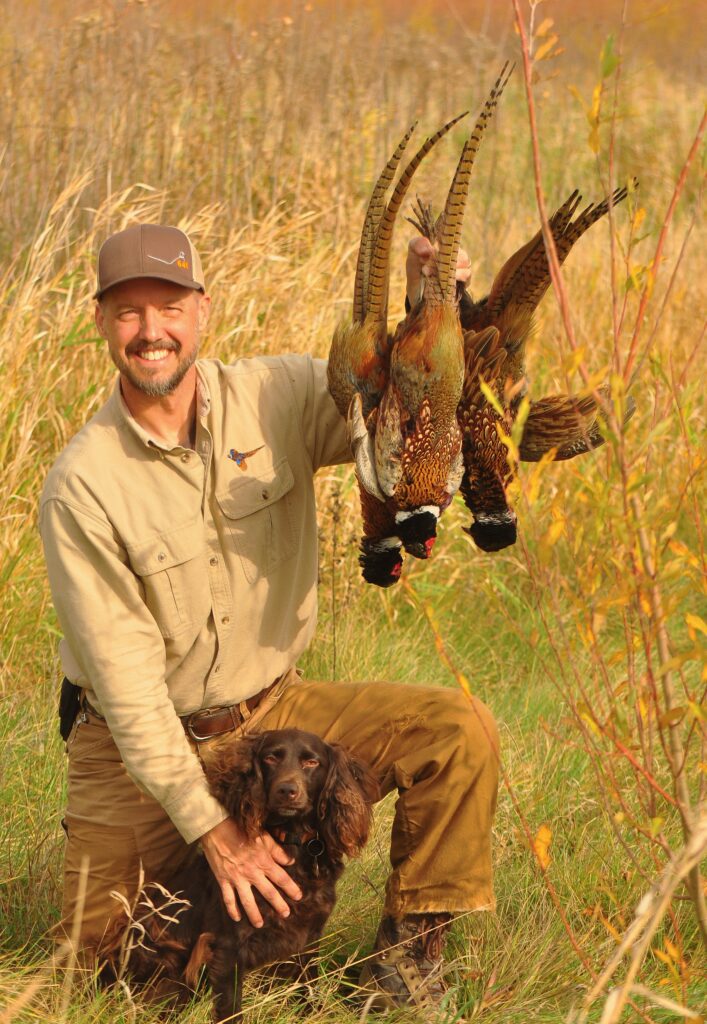
Most of Iowa’s pheasants are produced on private farm land. Nothing new. That’s the way it’s been since pheasants were first introduced here. But what has changed is the distribution and the importance of various pheasant habitats. When I first started hunting pheasants in 1959, rural Iowa was dominated by small family farms. All of these farms raised livestock and all supported a diversified mosaic of hay, oats, corn, and pasture land. Hay ground and small grains were the primary habitat types utilized by nesting pheasants. There was also limited acreage enrolled in the Conservation Reserve [CRP] Program. Referred to as Soil Bank in those days, CRP was mainly regarded as a supplemental bonus to annual pheasant production.
But times change and the tables have turned. Acreages devoted to hay and oats have declined dramatically during recent decades, and CRP has become Iowa’s primary nesting cover – no other habitat compares to its importance. Although CRP provides tremendous benefit to soil and water conservation and is likewise of great value to Iowa wildlife, this popular government program is far from secure.
The payments that individual landowners receive for enrolling in CRP is critical to the program’s success. A major setback to current enrollments is that the 2018 Farm Bill – the last complete Farm Bill passed by Congress — placed a firm cap on CRP rental rates. Adding insult to injury, there were also changes to how those rates are calculated. The result is that current rental rates are well below what landowners received ten years ago. The dilemma is further complicated by the fact that Congress has been unable to pass a new, no matter how desperately needed, federal Farm Bill.
Although the House of Representatives passed a bill at the end of April, there were no changes to CRP which locks in those poor rental rates for another five years. The Senate claims that it wants to pass a new Farm Bill, but that seems unlikely – at least at this point in time. Since Republicans only have a one vote Senate majority, they need a number [at least seven or more] Democrats to join in getting the proposal to the 60 votes needed to push the measure over the finish line. As it stands, it appears that few, if any, Democrats are likely to support the bill.
I don’t claim to understand all of the vast, make it or break it complexities affecting the passage – or non-passage — of the proposed Farm Bill. But I do understand a couple of the major hangups — at least the way I understand the latest proposal.
In a normal Farm Bill, programs like farmer payments and food stamps would be discussed on both sides of the aisle and funding levels would be agreed to by both parties. However, last year outside of the Farm Bill, Republicans with the One Big Beautiful Bill reduced funds for Food Stamp [SNAP] programs and proposed using that money for additional payments to farmers.
In a nutshell, Democrats are opposed to cuts for Food Stamps and are not supporting a new Farm Bill without restoration of some Food Stamp funds. Until some sort of compromise can be reached, that rift, by itself, is enough to keep a new Farm Bill from passing the Senate. End of story.
The gridlock comes as no great surprise. Farm Bills are generally partisan in nature with non-agricultural states supporting larger Food Stamp programs and agricultural areas supporting payments to farmers. I realize that this may be a gross oversimplification of very complicated federal program. But what can be said with certainty is that, unless some sort of bipartisan compromise can be reached, it is highly unlikely that a new Farm Bill will be passed this summer. And until a new Farm Bill is eventually passed [2027??] there will be no adjustment to the currently anemic CRP rental rates. Meanwhile, critical wildlife habitats will continue to vanish.
In 2018, Iowa had 1.8 million acres of CRP. As of 2025, the acreage had declined to 1.6 million acres – a net loss of 267 square miles of CRP – which translates into an additional one mile wide strip of lost upland nesting habitat that would span the state.
The decline continues. In 2025, Iowa had expiring CRP contracts equal to 239 square miles. With current low rental rates, landowner interest has understandably waned. Only 192 square miles were enrolled during 2025 – a net loss of 47 square miles. It gets worse. In 2026, Iowa has CRP contracts equal to 431 square miles due to expire. Only 290 square miles have been enrolled – an additional net loss of 140 square miles of habitat.
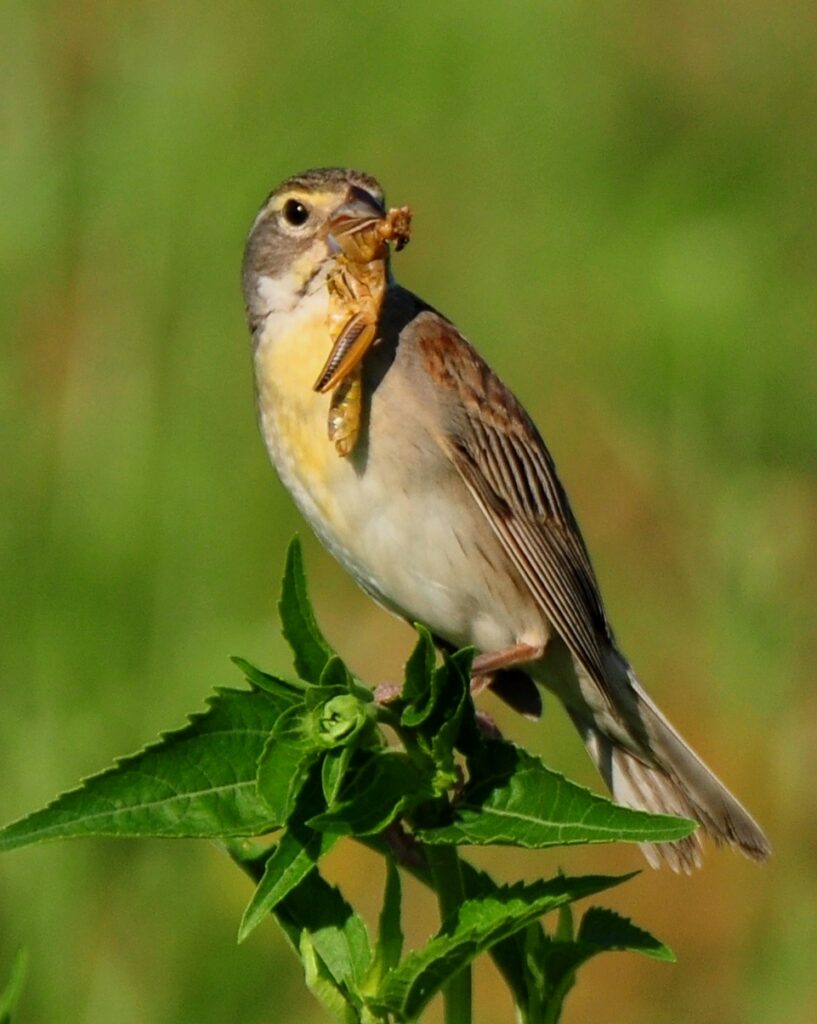
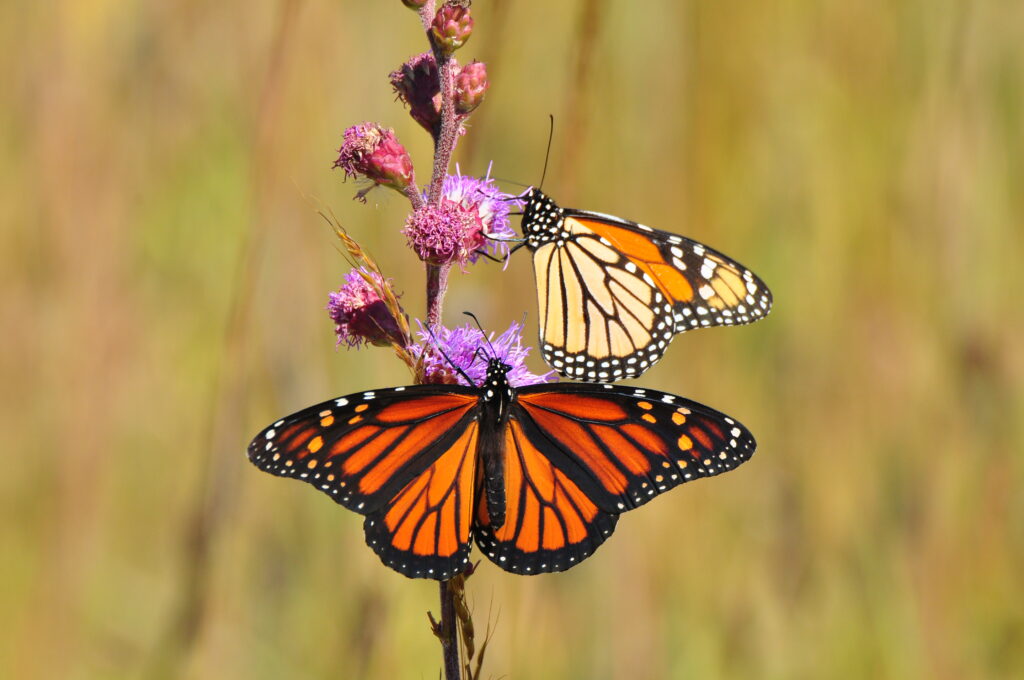
In addition to conserving soil and protecting clean water, CRP grasslands are also home to untold species of resident, as well as migratory, wildlife. Nearly 100 bird species alone utilize Iowa CRP. Everything from pheasants and mallards to dickcissels and monarch butterflies call these grasslands home during some season of the year. Every single acre of CRP counts, and every remaining plot is worth fighting for. Iowans have lost too much already.
Should pheasant nesting habitats and bird populations decline to the dismal levels witnessed during the 1980s – well, the stage for disaster would be set. One short series of poor nesting seasons could virtually eliminate pheasants from large portions the state. Have already been there. Have already seen that. Don’t ever want to go back.
Until a tourniquet is applied, the loss of CRP will continue. Unless the trend is reversed, the future for of Iowa’s grassland wildlife – including pheasants — appears to be anything but secure. The sad reality is that Iowa pheasant hunters don’t have a clue as to what’s coming.

 Craig Parker
 Ann Wolf
 Thomas Rinehart
 Susan Judkins Josten
 Rudi Roeslein
 Elyssa McFarland
 Mark Langgin
 Adam Janke
 Joe Henry
 Sue Wilkinson
 Tom Cope
 Kristin Ashenbrenner
 Joe Wilkinson
 Dr. Tammy Mildenstein
 Sean McMahon