
Photography courtesy of Lowell Washburn, all rights reserved.
Easier Than You Imagine!
The summer mushroom season is currently in full swing. I was reminded of this fact when my neighbor, Ron Davis, stopped by to offer me a colorful, one pound chunk of wild Chicken-of-the-Woods – one of Iowa’s most sought after summer mushrooms. The chunk was but half of a big cluster that Ron had just collected. In addition to being beautiful – at least to those of us who love wild fungi — the mushroom was also in prime condition — fresh, tender, and full of moisture. I lost no time in getting a generous portion of this woodland delicacy into a skillet and into my stomach. As is always the case with fresh mushrooms, the taste was absolutely sensational!
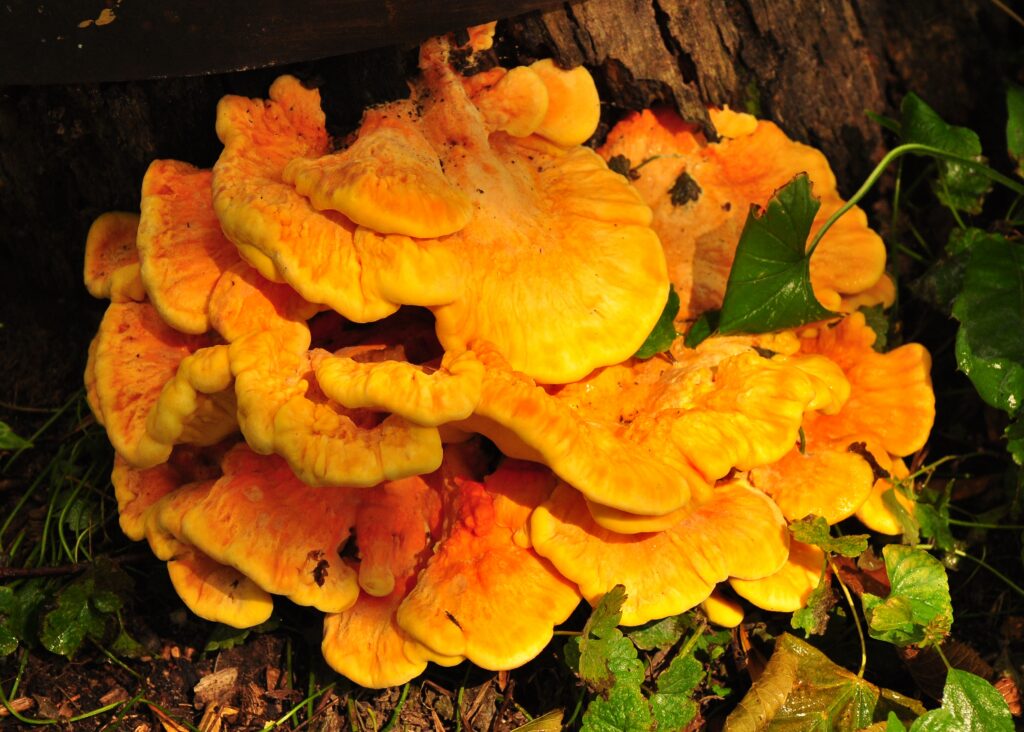
Although hunting for summer mushrooms may be a lot different than searching for spring morels, it can be just as rewarding. Despite the fact that summer foliage is generally much taller and much denser than spring ground cover, finding woodland mushrooms can actually be easier in July and August than it was back in April or early May.
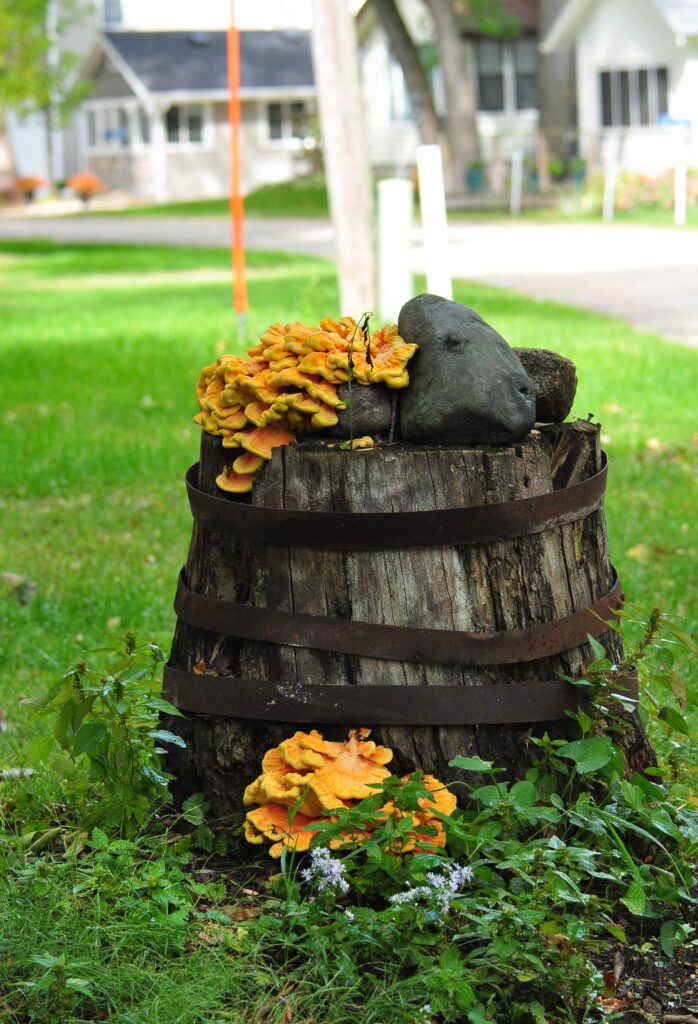
Spring morels, for example, are shy, crafty and secretive. A spring hunter may easily pass within literal inches of a hiding morel and never know it was there. By contrast, summer mushrooms are bold and beautiful, proclaiming their whereabouts with bright colors supported by non-camouflaged, easily detected profiles.
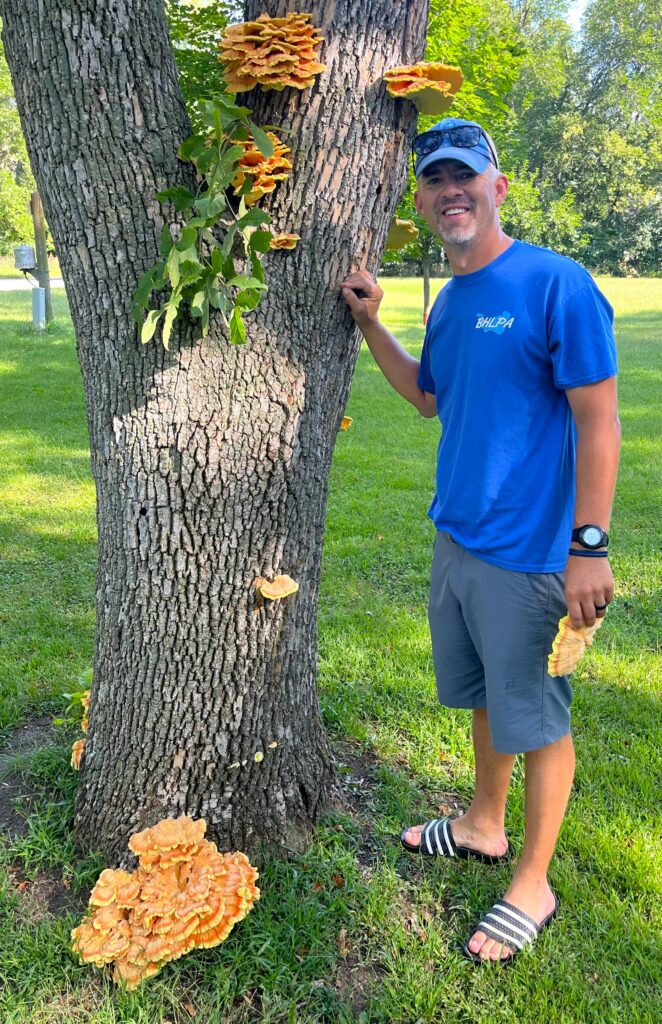
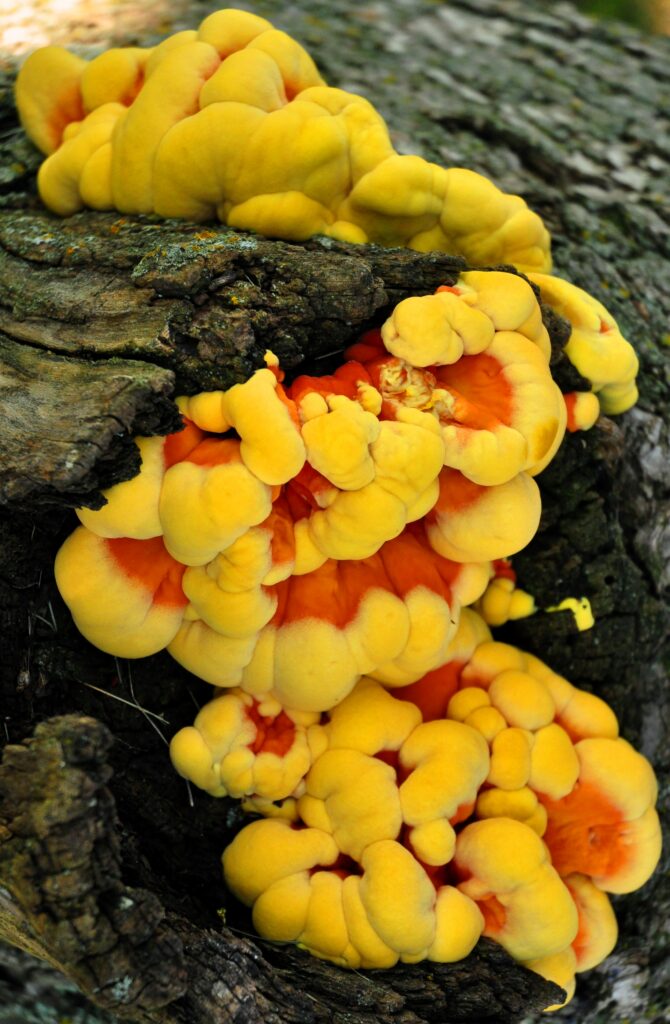
The sulfur shelf – most commonly referred to as chicken-of-the-woods – is one of Iowa’s most popular warm weather species. Sulfur shelves can be found on trunks, stumps, or deep woods deadfalls. If the ‘chicken’ is present, finding it is a no brainer. Like a glowing lantern in the dimly lit forest, the mushroom’s bright orange and yellow colors can often be spotted from distances of forty or fifty yards. When bathed in the soft light of early morning, the ‘chickens’ will almost scream their presence. Once harvested, I like to dice the shelves into quarter or half inch chunks and sauté in butter or olive oil. They can provide a stand-alone entrée or can be seasoned and mixed with vegetables, eggs, meat, jalapenos, or other spicy peppers. As is the case with all wild mushrooms, chicken-of-the-woods is best when captured young and tender.
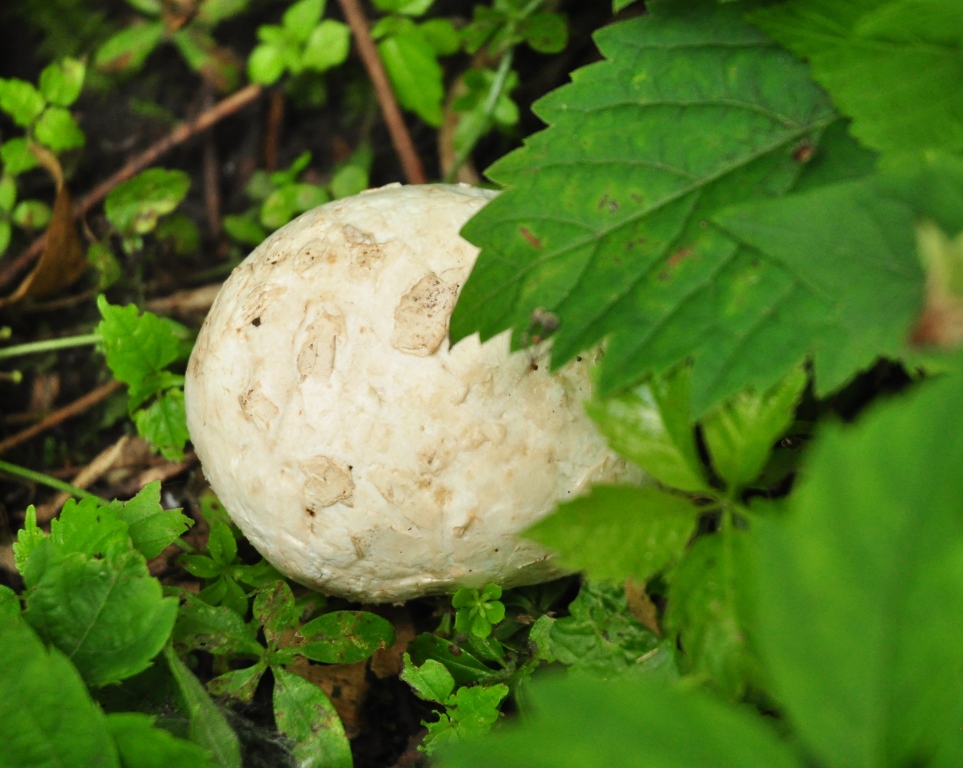
The puff ball is another great tasting, easy to find summer mushroom. Puffballs are residents of the forest floor. Think ‘soccer ball’ when hunting them. The snow-white puffball is huge, and really is about the same size and color as a soccer ball. Puffballs have incredibly dense meat, and quenching your appetite may only require a single serving. When cut in half, puffballs should have a uniform, ivory color all the way through. When the interior color begins to turn off-white or light yellow, they are past prime.
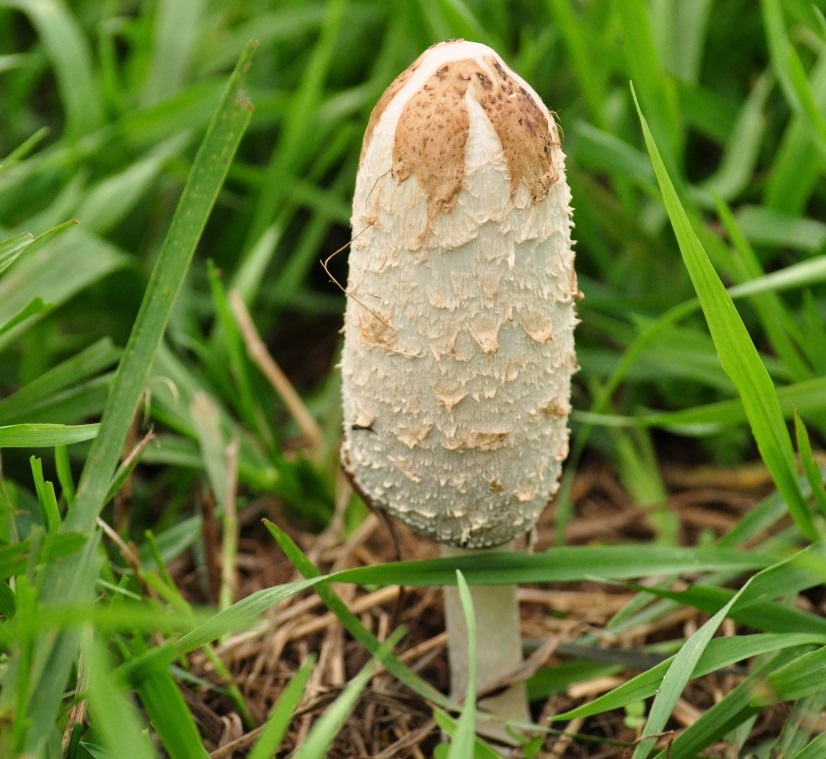
The shaggy mane – also known as an inky cap – is another easy to identify, easy to spot wild delicacy. Listed as one of the most nutritious of the wild mushrooms, shaggy manes are delicate and flavorful. Unfortunately, they are extremely short-lived with their prime of life only lasting for a day or two. Once harvested, they deteriorate rapidly and, even when refrigerated, must be prepared within hours.
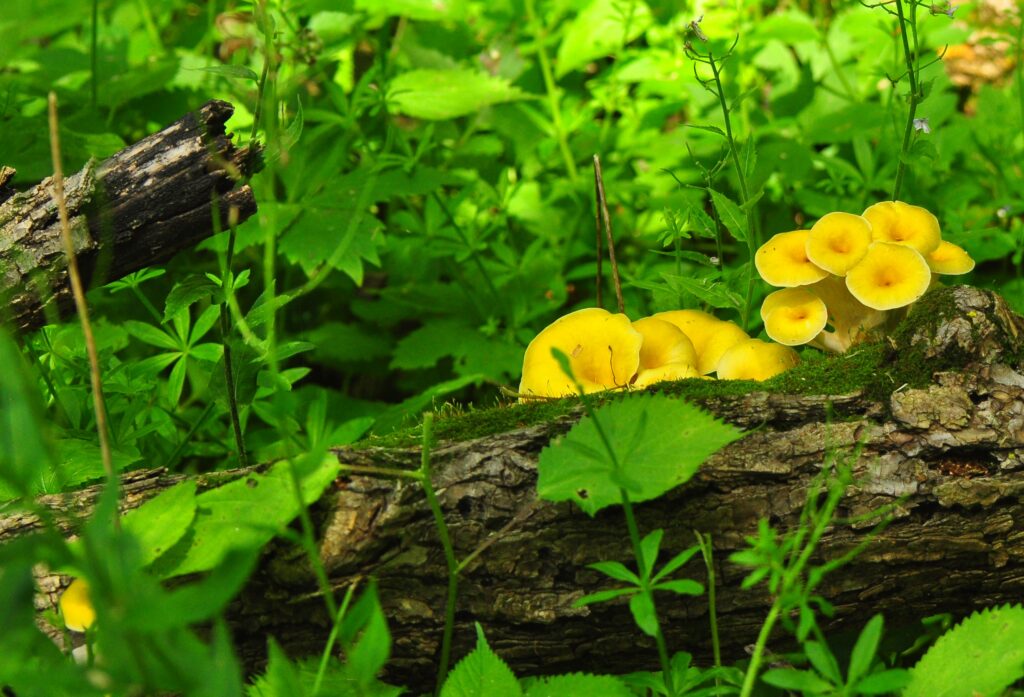
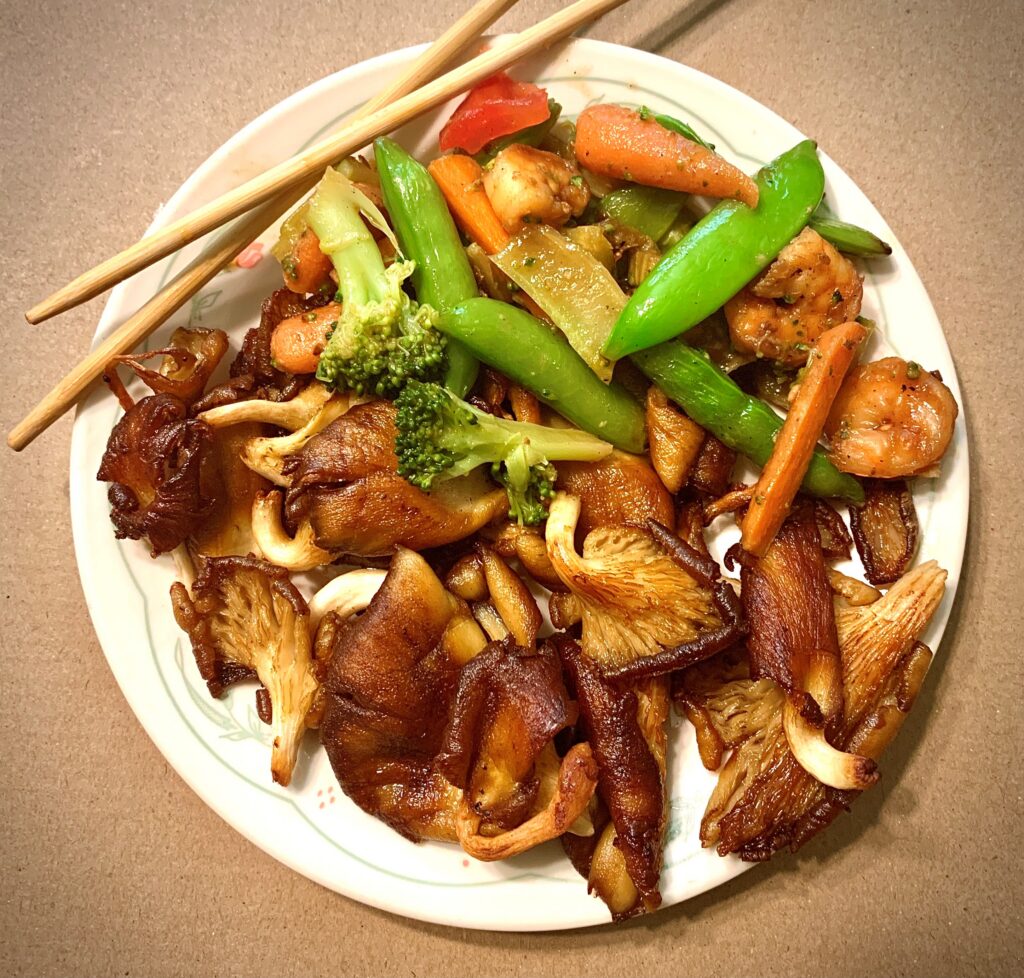
The golden oyster is Iowa’s newest species of wild mushroom and is a taste treat that every outdoor enthusiast should be aware of. A woodland native of China and Japan, the golden oyster thrives on, but is not restricted to, decaying hardwoods. The species appears in multi-stemmed clumps topped with golden or yellow caps of varying sizes. The cap’s underside is composed of delicate, ivory-white gills. Although commonly found in the street markets of southeastern Asia, the delicate species has an extremely short shelf life which restricts widespread commercial value. Oyster mushrooms are easily cultivated, however, and the westward march of North American populations are thought to have originated as “escapees” from homegrown mushroom gardens in the eastern U.S. University of Wisconsin researcher, Andi Bruce, has been tracing the U. S. naturalization of the species. So far, goldens have been documented in more than ten states, and have likely spread to others. A lover of summer heat and humidity, golden oysters can occur on ground level deadfalls as well as on the trunks of both dead and healthy trees. In Iowa, the species is becoming increasingly abundant. In the opinion of a growing number of enthusiasts, the golden oyster ranks as the best of the best when it comes to earthy, full blown wild mushroom flavor.

 Craig Parker
 Ann Wolf
 Thomas Rinehart
 Susan Judkins Josten
 Rudi Roeslein
 Elyssa McFarland
 Mark Langgin
 Adam Janke
 Joe Henry
 Sue Wilkinson
 Tom Cope
 Kristin Ashenbrenner
 Joe Wilkinson
 Dr. Tammy Mildenstein
 Sean McMahon