
Photography courtesy of Lowell Washburn, all rights reserved.
For a representative form of government –- of the people, by the people, and for the people – to survive for two and half centuries is something of a miracle. But that is exactly what Americans are celebrating this summer; 250 years of life, liberty, and the pursuit of happiness.
The Fourth of July has always a big deal, but it seems as if this year’s festivities are bigger and better than ever. For the past couple of weeks, for example, more and more people are displaying more and more American flags. Flags proudly wave from the lawns of government buildings, churches, the beds of pickup trucks, and neighborhood front porches. Many flags, along with other patriotic decorations, are inscribed with the common theme — “Happy 250th Birthday America”. More than a few customized flags and banners have also included images of our national emblem — the bald eagle.

Powerful, fierce, and majestic, the eagle is an appropriate symbol for America. Our nation and the eagle have many things in common. Following the American colonies’ fight for independence, our nation has endured numerous conflicts. Some of the more noteworthy include a bloody Civil War, two World Wars, Korea, Vietnam, Iraq, Afghanistan, and Iran to name a few. Add to that flood, drought, hurricanes, tornadoes, and the pandemic of 2020. The list goes on.
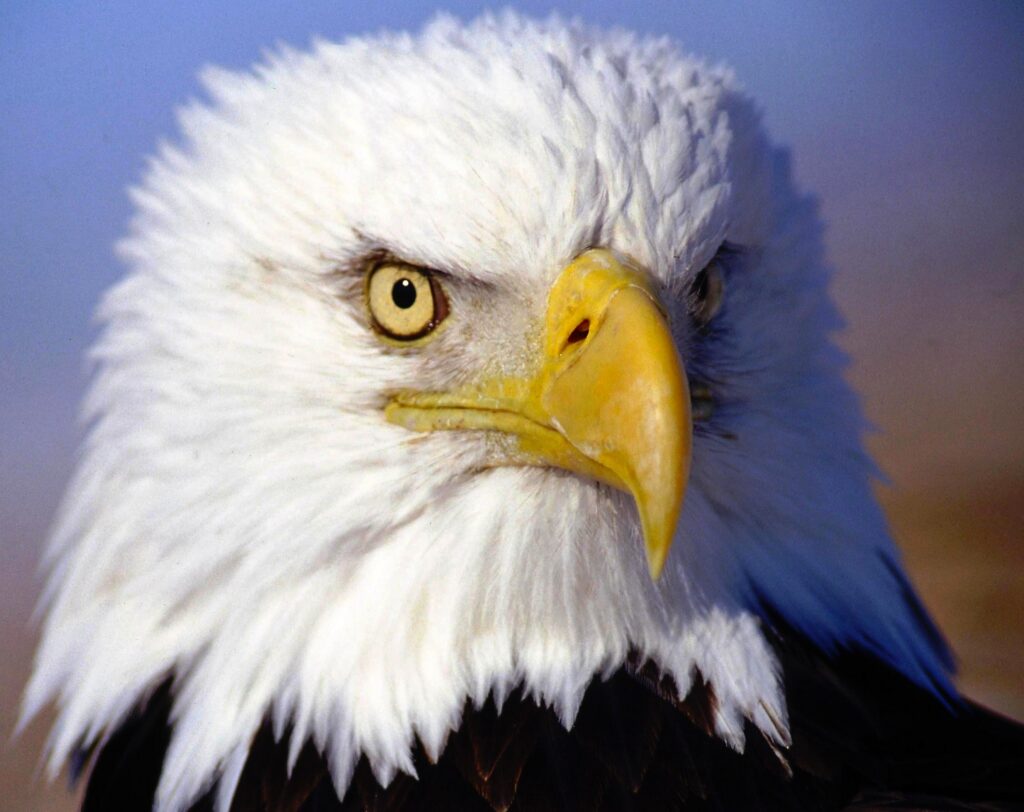
Like our great nation, the eagle has also endured some hard times during its fight for survival. Mistakenly perceived as a threat to livestock, eagles were shot and trapped for decades. But it was the widespread, post World War II use of DDT pesticides that eliminated the eagle — along with peregrine falcons, ospreys, and other species – from much of its historic range. By the late 1950s, declining eagle populations were in free fall. By 1963, the number of bald eagles in the Lower 48 had dropped to an estimated 400 pairs, maybe less. Spotting an eagle had become a rare event. If you did manage to see one, you would think and talk about the event for weeks. The species’ future was far from certain.
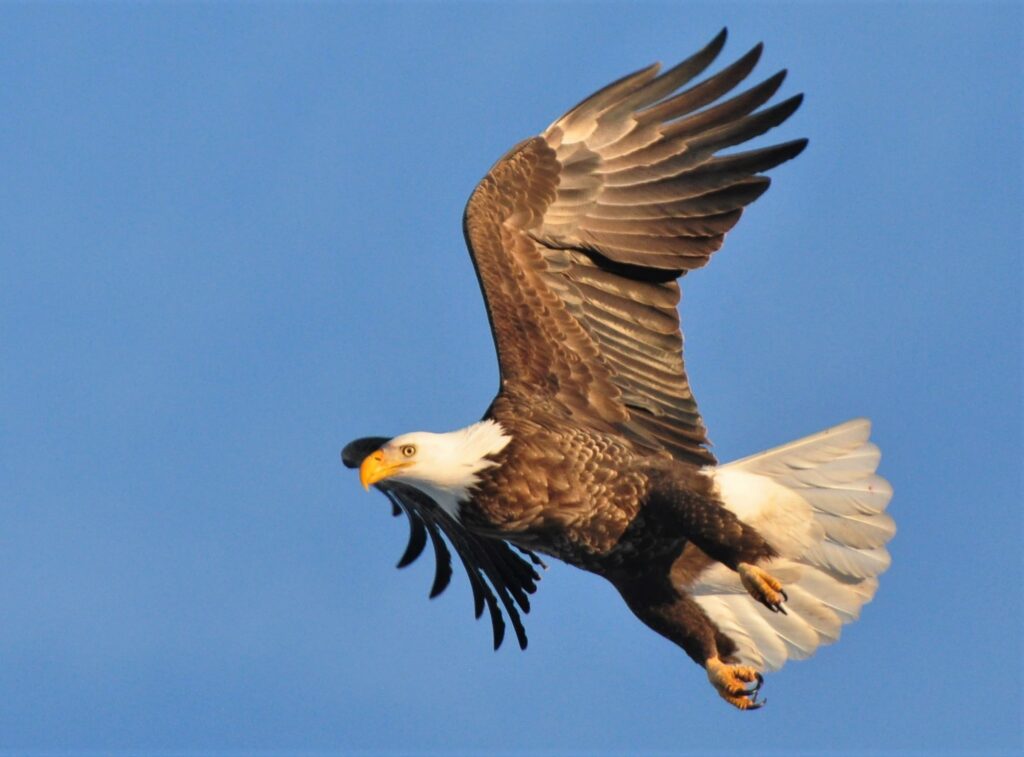
The bald eagle’s alarming, downward spiral was halted by two fortunate events. The first was a nationwide, 1972 rule banning DDT. The second was listing the bald eagle on the newly created Threatened and Endangered Species Act. The rest, as they say, is history. Free of DDT contamination, eagles began the long road to recovery. As numbers increased, populations began to slowly reclaim historic nesting grounds. Bald eagles officially returned to Iowa when – following an absence of 70 years – a pair nested here in 1977.
Today, bald eagles have become a common sight across our nation. Remarkably, eagles are currently nesting in all of Iowa’s 99 counties. During the 2025 nesting season, 832 active territories were documented in the state. During a typical year, around 60 percent of eagle nests successfully produce young. Iowa has also become an important wintering area for eagles from the north. During last year’s winter survey, a record 5,795 birds were inventoried – with the greatest numbers recorded along the Mississippi River.

Resilient and enduring, there is no denying that the American bald eagle is back. Like our great nation, the eagle has survived many perils. Withstanding the test of time, the eagle remains as strong and magnificent as ever. The return of the bald eagle is just one of the many things that Americans have to be thankful for.

We hold these truths to be self-evident that all men are created equal, that they are endowed by their Creator with certain unalienable Rights, that among these are Life, Liberty, and the pursuit of Happiness – The United States Declaration of Independence

 Craig Parker
 Ann Wolf
 Thomas Rinehart
 Susan Judkins Josten
 Rudi Roeslein
 Elyssa McFarland
 Mark Langgin
 Adam Janke
 Joe Henry
 Sue Wilkinson
 Tom Cope
 Kristin Ashenbrenner
 Joe Wilkinson
 Dr. Tammy Mildenstein
 Sean McMahon