Photography courtesy of Lowell Washburn, all rights reserved.
The sound of southbound geese passing in the night is a soul stirring event. The clamoring vocalizations provide human listeners with a curious blend of excitement, mystery, and urgency of adventure; a converging array of wild sounds that penetrate the human spirit to its very core. If those same geese are silhouetted against the icy whiteness of an October full moon, then the rich combination of sight and sound is likely to give you, well, is likely to give you goose bumps.
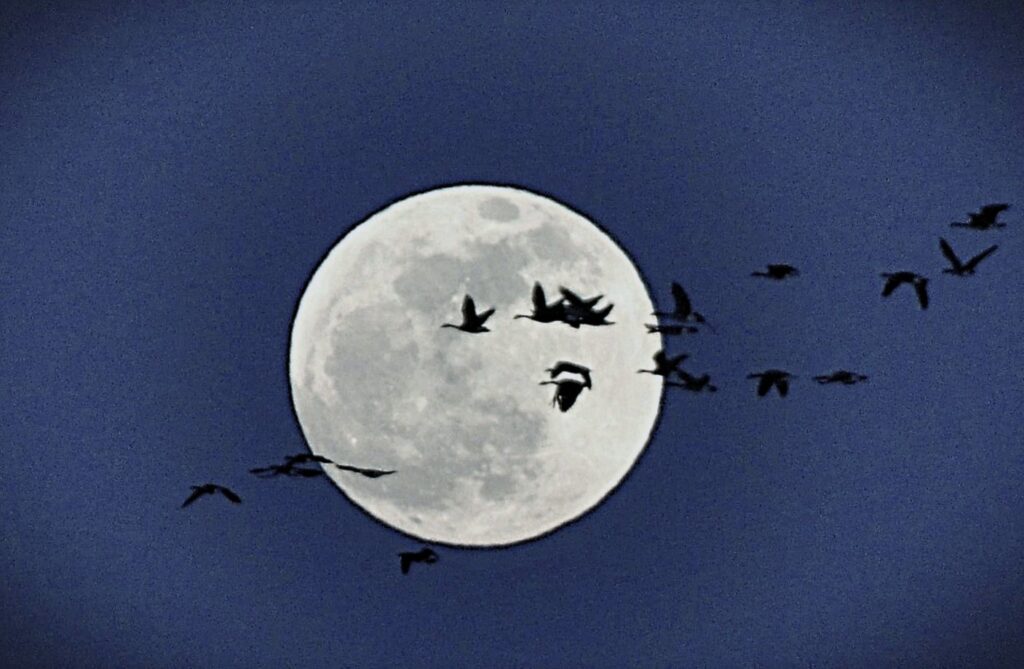
When I was a kid, Canada geese only occurred as high flying, sub-arctic migrants which came through Iowa during mid to late October. Iowa was fly over country, and the majority of those flocks never touched down before reaching Northern Missouri’s Swan Lake National Wildlife Refuge. Consequently, most “Canadian Honkers”, although frequently heard in the night, were rarely seen by day – a fact which only added to the bird’s legendary sense of mystery.
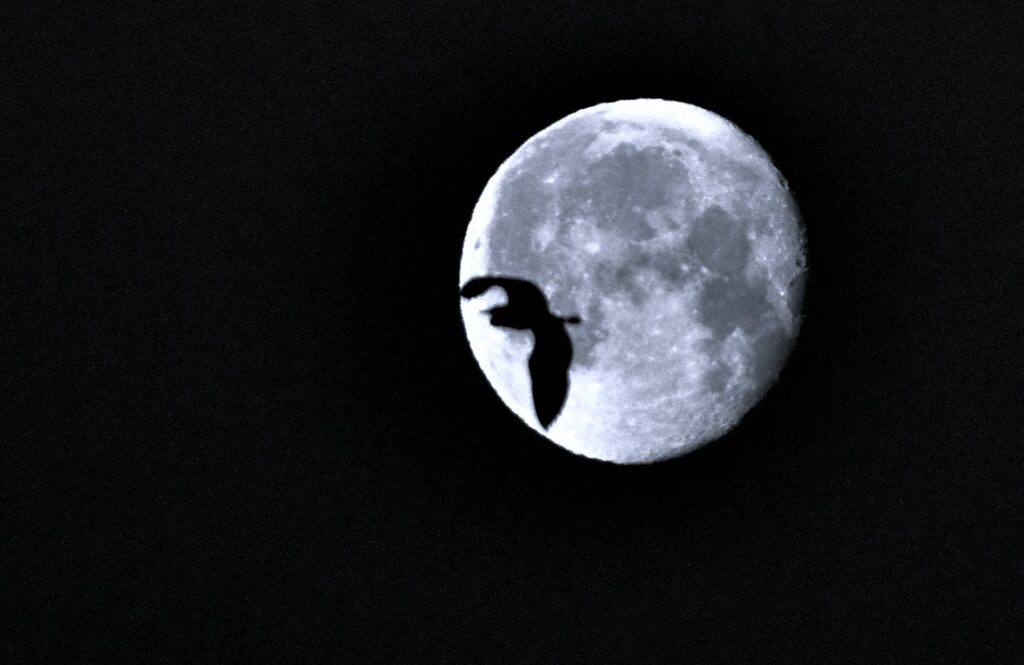
On a day following what must have been a big migration night, middle school classmate, Joel Secory remarked that the sound of wild geese made him “feel funny inside.” That statement pretty well summed up the power of goose music on the human psyche. I agreed with him then, and feel the same today. The power of that wild symphony never seems more real than during the fullness of the Hunter’s Moon. This year, the peak brilliance of the Hunter’s Moon will occur on October 25 & 26 when the full moon will rise about the same time the sun sets. Big, bright, and beautiful, the Hunter’s Moon is a nighttime event you won’t want to miss.
For those who pursue migratory waterfowl, the Hunter’s Moon is well named. For it is during this annual lunar cycle that a majority of the so called mid-season migrants will pass through Iowa. In addition to Canada geese, the migratory night flights will include pintails, green-wings, gadwall, wigeon, and redheads. There’s more. In addition to waterfowl, the evening manifests are further bolstered by the addition of migrating herons, egrets, flickers, golden-crowned kinglets, late autumn warblers, shorebirds, and others. Although individual nighttime bird counts may number into the hundreds of thousands, the flight is not the consequence of North Country freeze-ups, snowstorms, or any other form of inclement weather. It is simply the result of an ancient, undeniable impulse for birds to move southward.
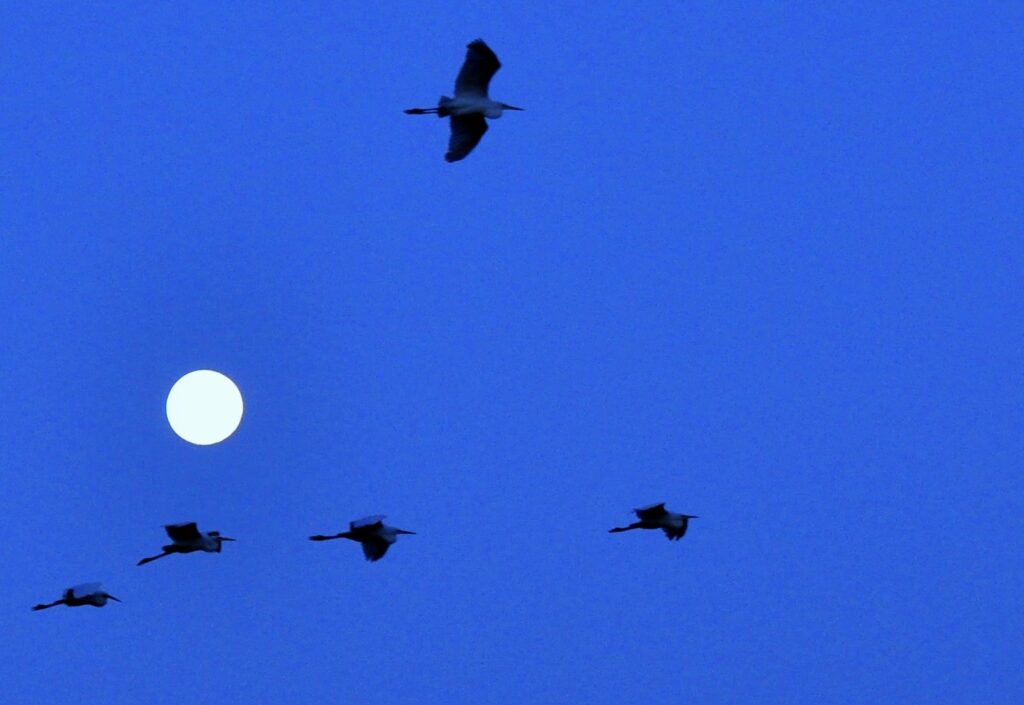
For migratory birdlife, the Hunter’s Moon is a time of transition; a dramatic shift from summer habitats to distant wintering grounds. For we earthbound humans, the Hunter’s Moon is a stark reminder that the pleasant days of October are on borrowed time. But instead of taking wing for distant destinations, we grab a sharpened ax to begin shoring up the winter woodpile.

 Craig Parker
 Ann Wolf
 Thomas Rinehart
 Susan Judkins Josten
 Rudi Roeslein
 Elyssa McFarland
 Mark Langgin
 Adam Janke
 Joe Henry
 Sue Wilkinson
 Tom Cope
 Kristin Ashenbrenner
 Joe Wilkinson
 Dr. Tammy Mildenstein
 Sean McMahon