
Photography courtesy of Lowell Washburn, all rights reserved.
I spend more time messing around with wood ducks than I do with any other waterfowl. The cycle begins in late winter — time to spruce up the nesting boxes where hens will lay, incubate, and hatch their eggs. During summer, I watch as broods grow from fuzzy little ducklings to airborne adolescents. Come October, I hunt wood ducks in secluded wetlands and hopefully bring a few to the dinner table. When it comes to full flavored, fine dining, only the famed canvasback can rival a properly prepared, acorn fattened wood duck.
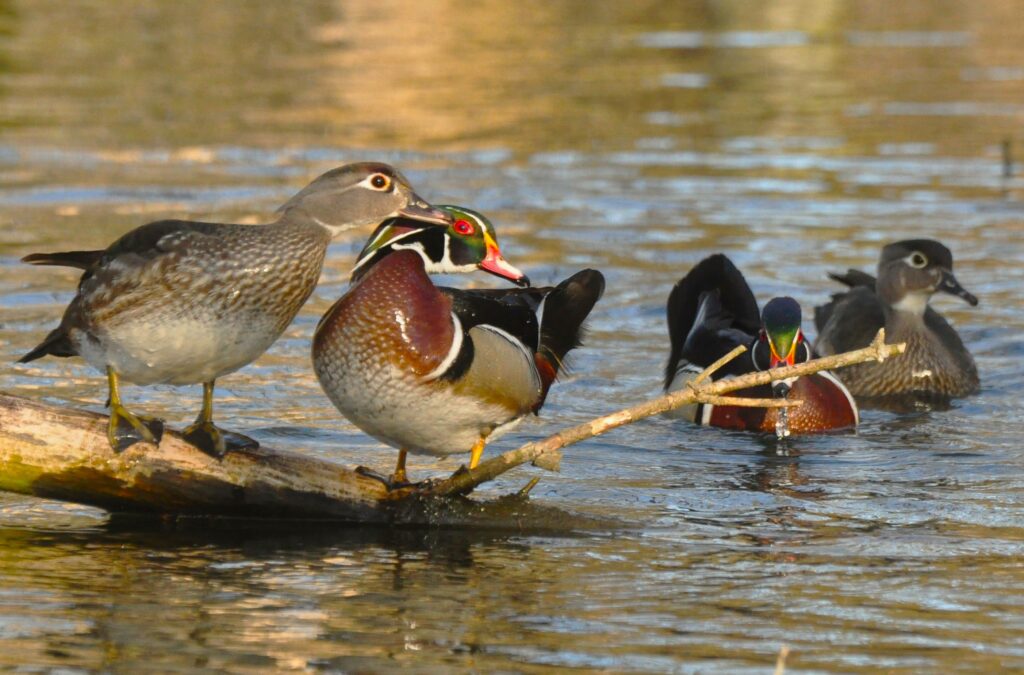
The wood duck’s annual cycle begins on the southern wintering grounds where hens select the mate that will accompany her back to the place of her birth. Arriving in Iowa shortly after spring ice out, pairs immediately begins searching for a suitable nesting cavity. Competition is keen as everything from squirrels to screech owls vie for the same natural tree cavities. Nest boxes can provide hens with additional choices. When installed with predator guards, nest boxes are not only suitable for nesting but, equally important, are safe from raccoons and other nest destroying mammals.
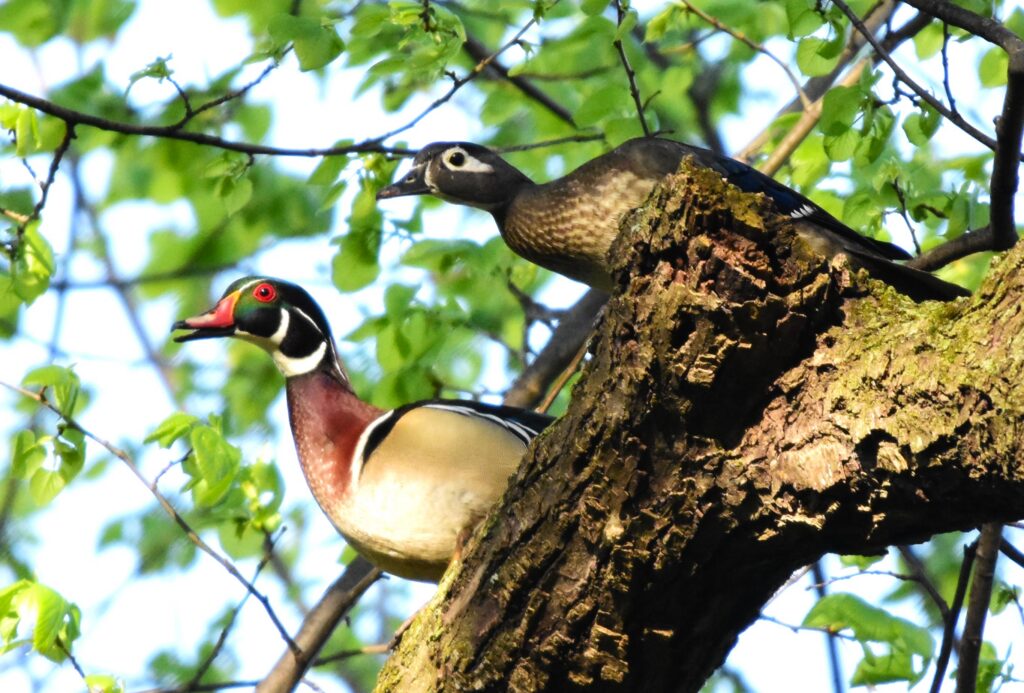
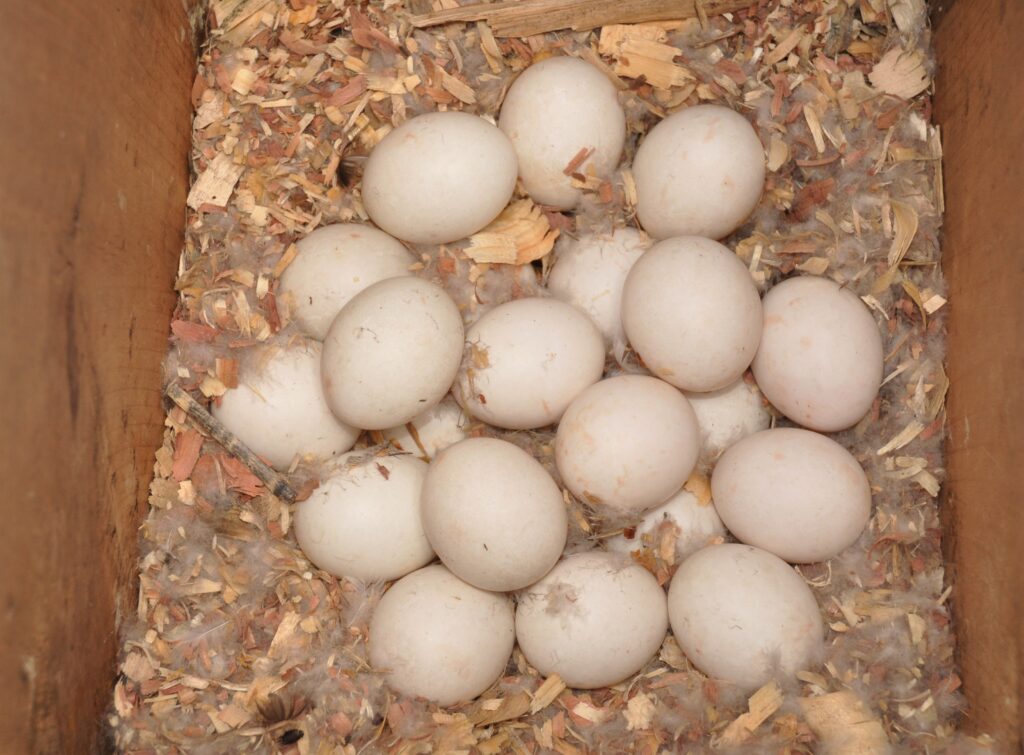
Adult hens often return to exact location where they had success the year before. Hens that were hatched in natural tree cavities the year before will look for a natural site of their own. Hens hatched from nest boxes tend to select box sites over natural cavities. Once a site is selected, the hen lays an egg a day until the clutch is complete – anywhere from eight or 10 to a dozen or more eggs. The hen pulls down from her own breast to supplement whatever natural debris is already in the cavity, and the month long incubation begins when the last egg is laid. Once incubation is underway, the drake abandons his mate to join a bachelor group for the summer molt. The hen assumes full responsibility for rearing the brood.
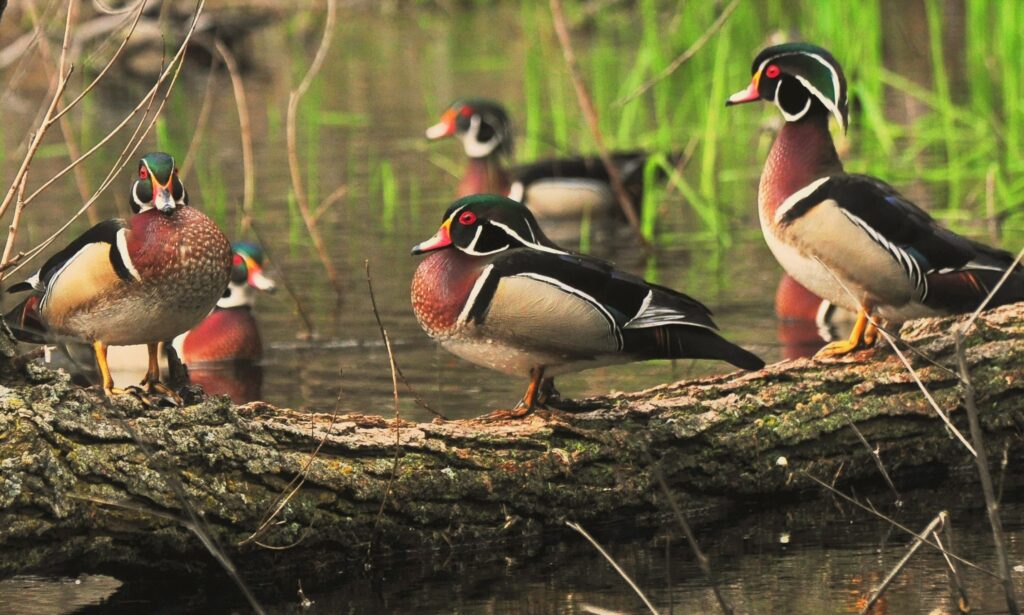
As we move into summer, this year’s nesting season has peaked. Although a few hens are still going, most clutches have hatched. Once ducklings are out of the egg, the hen keeps them in the nest for around 24 hours. The mass exodus occurs the morning following the hatch – at least in the broods I’ve had the good fortune to observe.
Once the big day arrives, the hen leaves the nest and flies away, presumably to retrace the route where she will lead her young to water. Returning to the sight, the hen lands below the nest and begins calling the ducklings from the nest. Upon hearing her soft coaxing, the nest cavity becomes a very animated, very noisy place as ducklings begin simultaneously jumping toward the nest’s entrance. Once the exit is reached, the ducklings leap from the cavity without hesitation. Doesn’t matter if the fall is ten feet or fifty. With no regard for personal safety, the little fuzz balls launch from the cavity with obvious enthusiasm; their stubby little wings flapping a mile a minute. Although some may actually bounce when hitting the ground, their weightlessness prevents injury.
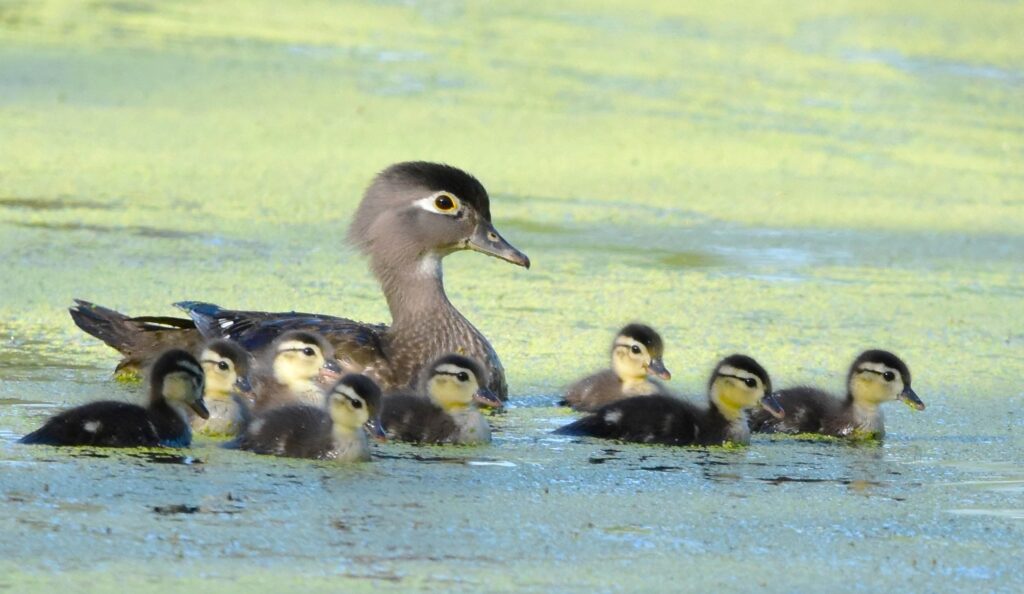
Once the first duckling makes its leap, things progress rapidly with its nest mates appearing in the entrance two and three at a time. Several years ago, I did a film for the North Iowa Area Community College which included a brood of wood ducks leaving their nest at Cerro Gordo County’s Mallard Marsh. The brood contained 12 ducklings and the entire exodus took less than two minutes.
Once a brood is assembled below the nest, the hen immediately leads her babies to a previously selected wetland. The distance can be amazing. During the early 1980’s, I had a project where I banded brooding hens and then marked their hours-old, babies with numbered web-tags before leaving the nest. One especially notable hen occupied a cavity that was quite a way from the nearest wetland. This brood also contained 12 ducklings. Hoping to relocate the brood in the future, I marked the bottom half of the hen’s crest with a light colored, nontoxic paint. The brood left the nest early the next morning. Amazingly, due to the hen’s unique hairdo, I was able to relocate the ducks less than 72 hours later where the hen had taken them to a marsh located more than a mile from the nest site. The trek had involved navigating a thick grassland, a cornfield, a busy roadway, and a small woodland before finally reaching their destination. Even more amazing was the fact that the marked hen was still accompanied by a string of 11 little ducklings. The wood duck is an incredible species.
 Craig Parker
 Ann Wolf
 Thomas Rinehart
 Susan Judkins Josten
 Rudi Roeslein
 Elyssa McFarland
 Mark Langgin
 Adam Janke
 Joe Henry
 Sue Wilkinson
 Tom Cope
 Kristin Ashenbrenner
 Joe Wilkinson
 Dr. Tammy Mildenstein
 Sean McMahon