
Photography courtesy of Lowell Washburn, all rights reserved.
Forsaking their Canadian breeding grounds, millions of tiny wood warblers are currently moving toward traditional wintering areas in Central and South America. For Iowa birding enthusiasts, it is one of the year’s most anticipated migrations. When conditions are right, millions of warblers will cross the state during a single twenty-four hour period. It’s an event that no birder will dare to miss. As the flight progresses, a growing crowd of binocular laden human enthusiasts will take to local woodlands in hopes viewing the parade.
The autumn migration moves quickly. When it comes to fall warbler watching, timing is critical. This is definitely a — snooze and you loose — outdoor event.
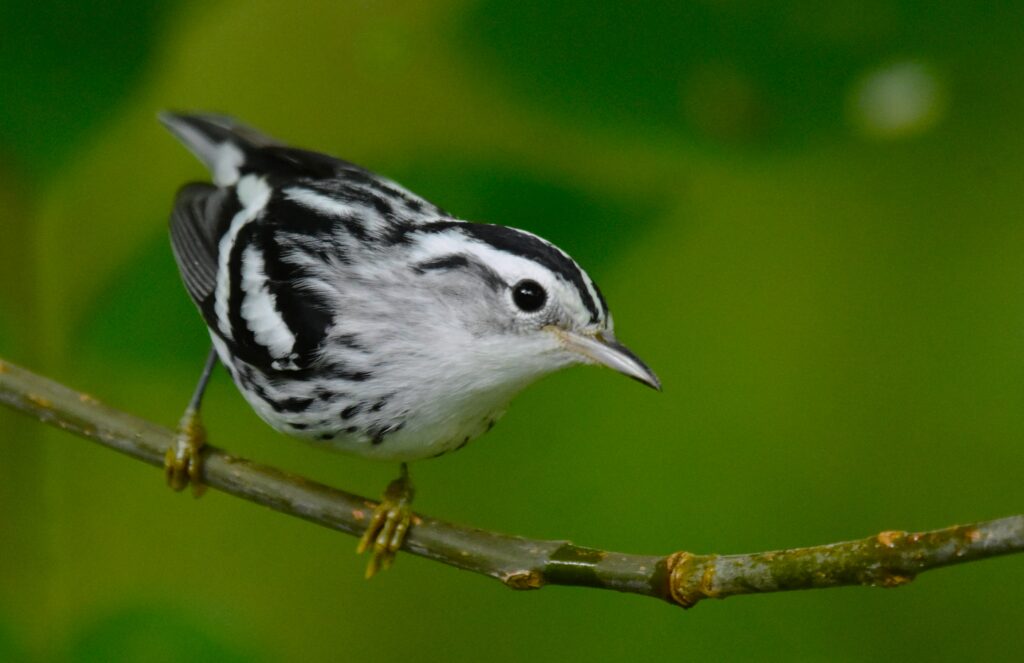
Wood warblers are nighttime migrants. Following several rigorous hours of navigating the starry skies, wing weary migrants eventually begin returning to earth – usually just before daybreak. For most, the first part of the day will be spent in restful seclusion, and birds generally won’t become active until about mid-morning.
Having little use for plant foods, warblers live nearly exclusively on insects. Once warming temperatures cause tiny insects to begin moving, the warblers go into action – darting in and out of thick vegetation in a voracious, bug consuming rampage.
Everyone will agree that the annual flight makes for an exciting visit to the Iowa outdoors. But for many, the joys of migration are also tinged with bits of frustration. Of all the feathered families, no other grouping of birdlife presents a greater challenge to identify than the autumn warblers.
There are several factors that make fall warblers so difficult. Not the least is that most species spend their days hidden within the dense confines of the woodland’s thickest foliage. Once they start moving, warblers are hyperactive, rarely staying in one spot for more than a second or two. Sometimes, the only view you’ll get is a split-second, half-a-bird snapshot as a tiny bundle of feathers darts through a fist-sized opening in the vegetation. Little wonder that warblers give us such fits.
Even when warblers are bedecked in their brightest spring colors, making an accurate, split second identification can still be difficult. But during the fall migration, things get even more confusing as warblers arrive in comparatively nondescript juvenile or autumn plumages.
Fortunately, there are some basic clues that can help us make a quick and positive ID for most species.
First off, it’s important to note that all warblers can be divided into one of two distinct categories – those with wing bars, and those without wing bars. Once you determine if the bird you’re trying to identify does or does not have wing bars, you’ve immediately eliminated about half of the potentially incorrect choices.
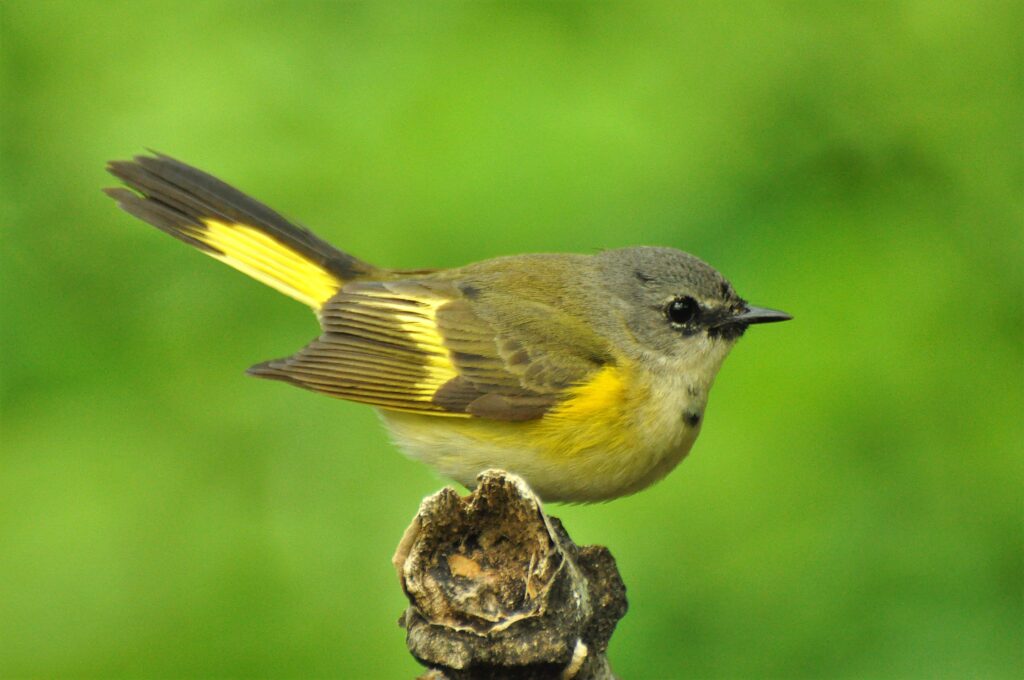
During fall migration, most warblers are cloaked in subdued tones of brown, gray, yellow, and olive. When colors are drab, the best clues to identification come from distinctive plumage patterns – things like eye rings, throat bibs, or tail spots. For example, if your warbler lacks wings bars but has a distinctive yellow spot on its wing, side, and tail; then the bird is an American redstart. With that set of key markings, there is nothing else it can be.
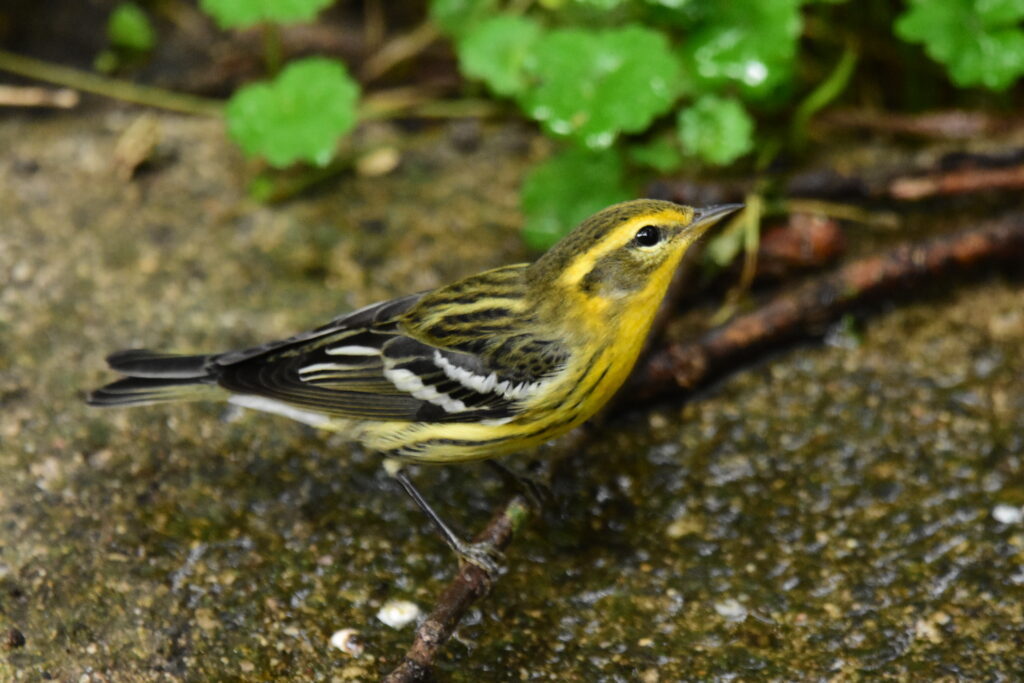
If the bird in view does have wing bars, and is sporting a distinctive triangular ear patch accented by a bright yellow stripe above the eye, then you’re looking at a Blackburnian warbler. That’s the only bird it can be.
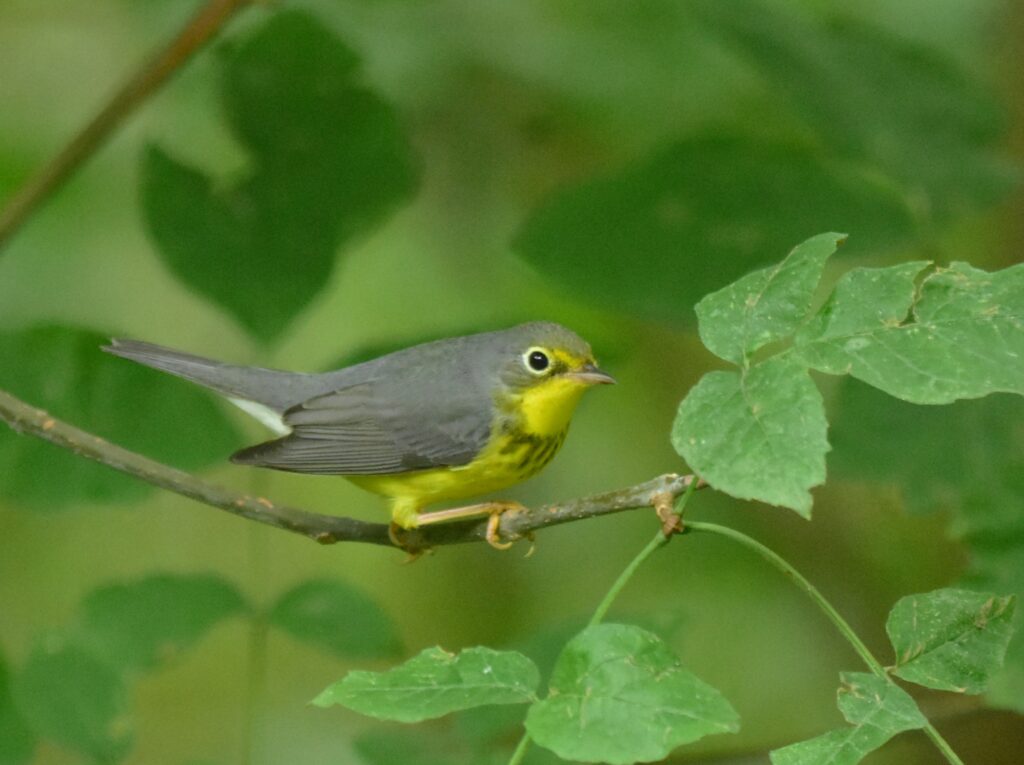
If the bird you’re watching lacks wing bars, has a slate gray back and head, a yellow breast adorned with a decorative black necklace, a light colored eye ring and a yellow dash [spectacle] between the eye and bill, then the bird is a Canada warbler. That combination of keys is unique; there is no other bird that can complete that multi-point description.
With nearly thirty species of migrating warblers to choose from, most of us won’t be able to identify every single bird we see; few people do. But don’t let that wreck your outing. You don’t have to be a trained biologist to have fun watching wild birds. You just need to be there.

 Craig Parker
 Ann Wolf
 Thomas Rinehart
 Susan Judkins Josten
 Rudi Roeslein
 Elyssa McFarland
 Mark Langgin
 Adam Janke
 Joe Henry
 Sue Wilkinson
 Tom Cope
 Kristin Ashenbrenner
 Joe Wilkinson
 Dr. Tammy Mildenstein
 Sean McMahon