
Photography courtesy of Lowell Washburn, all rights reserved.
Using a spear to collect Iowa sportfish is illegal – that is unless you happen to belong to a unique grouping of long-legged, feathered waders that are regular summer residents here. Collectively referred to as wading birds, there are more than a half dozen species of herons, egrets, and bitterns that annually visit Iowa wetlands during our open water season.
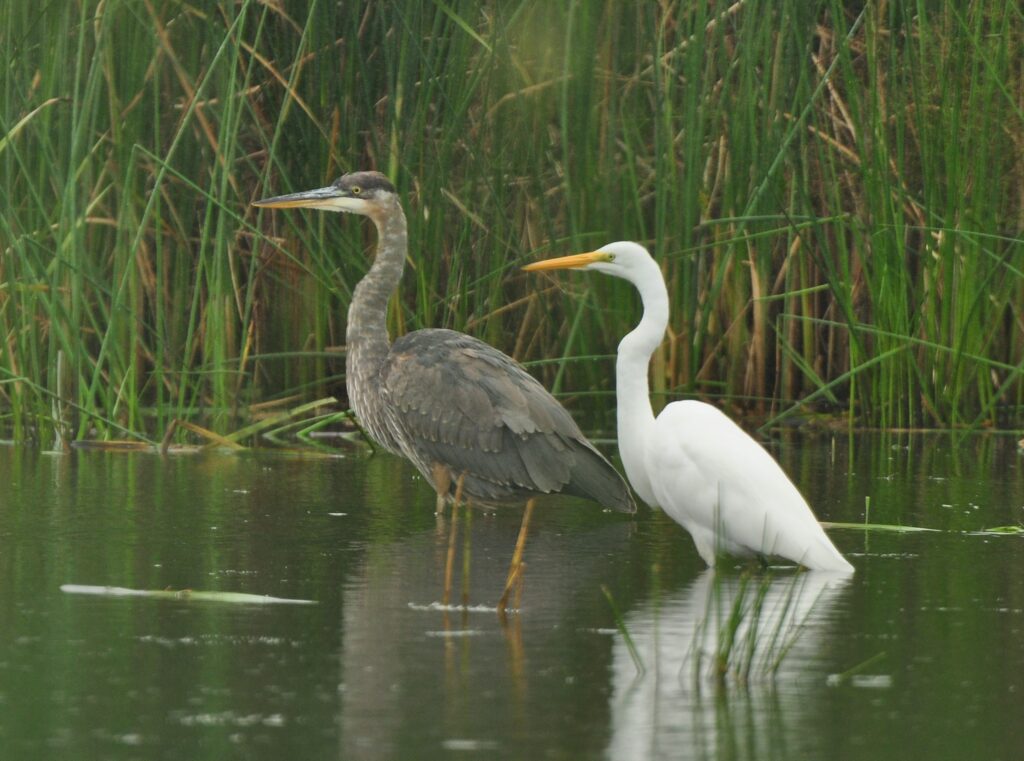
The largest and most commonly encountered member of this interesting family is the great blue heron, a tall and stately bird which can often be seen prowling the sandy shorelines of our larger lakes or probing the muddy margins of shallow backwaters. Like the rest of its clan, the blue heron is equipped with long legs, a ridiculously long neck, and spear-shaped bill. Blue herons are solitary hunters, slowly searching likely habitats for fish, frogs, and snakes. Once prey is spotted, the heron extends its neck to its fullest, takes careful aim, and then rapidly conducts its lightning bolt strike. Although recently fledged young are somewhat clumsy, adult herons strike with uncanny precision. The majority of their strikes result in a capture. The blue heron pictured in the attached photos was successful in capturing a fish on eleven of twelve attempts.
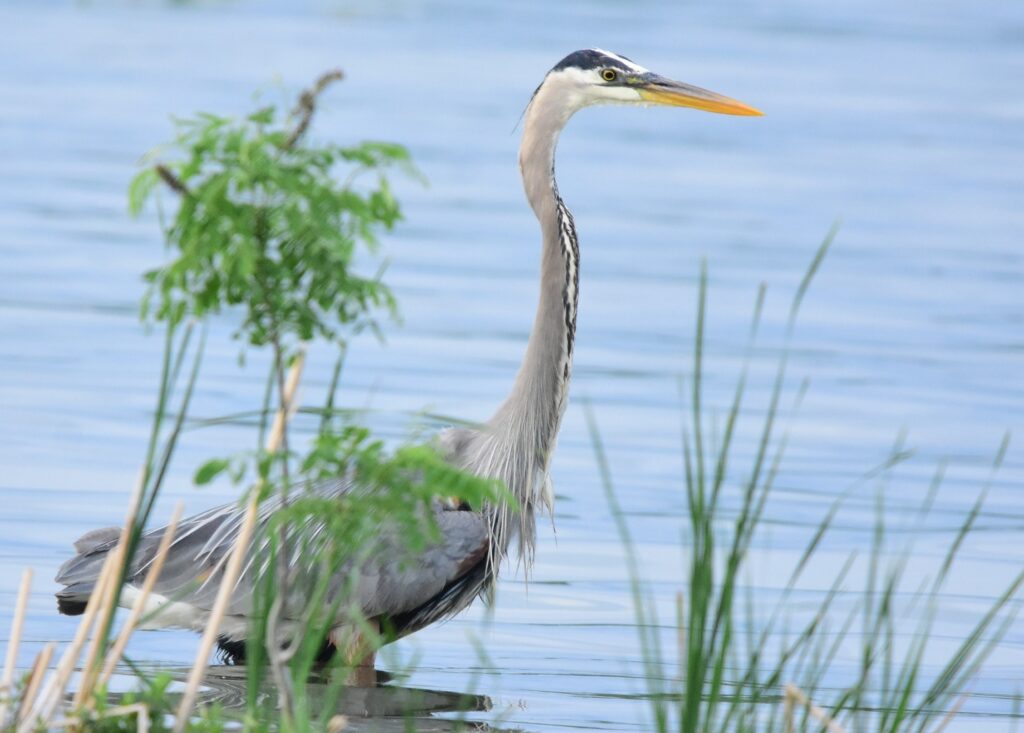
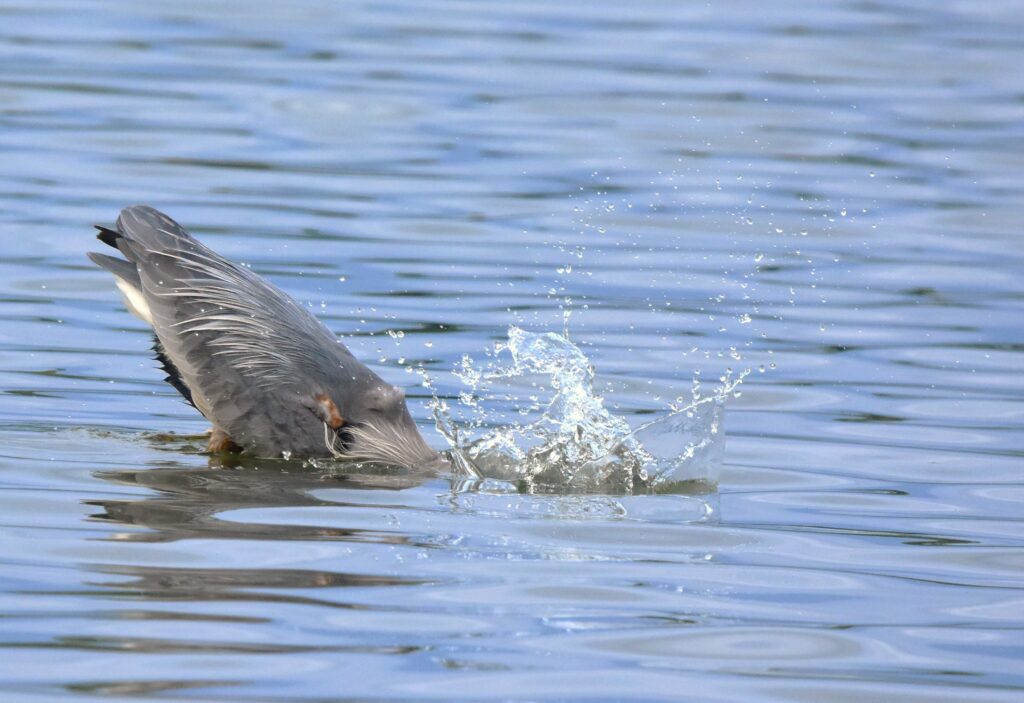
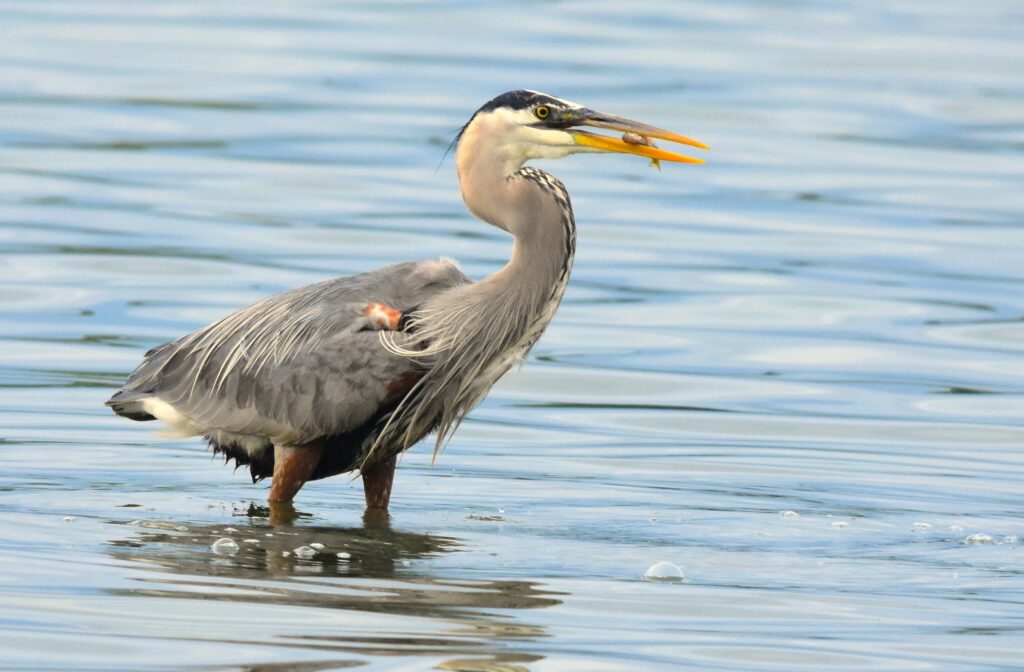
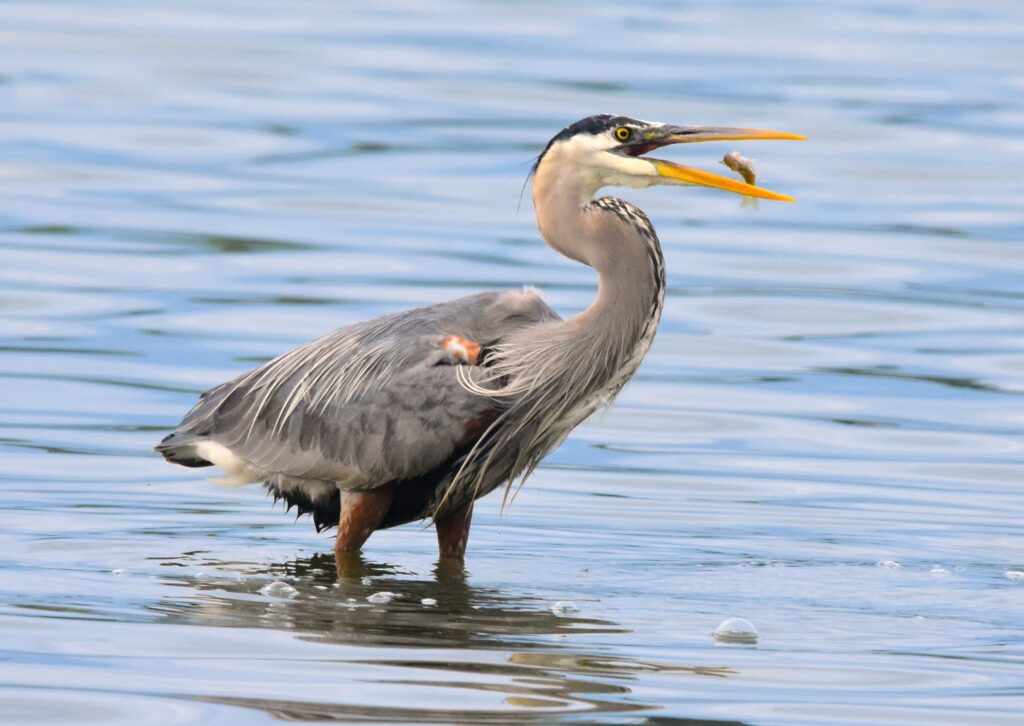
Although there are rare exceptions, most fish are not actually speared but are rather grasped as herons use their bills in a scissor-like fashion. Once a fish is captured, the bird deftly flips its prey into a position where it can be swallowed head first. Swallowing spiny prey head first effectively neutralizes the prickly dorsal spines that would otherwise make swallowing the fish dinner a painful proposition.
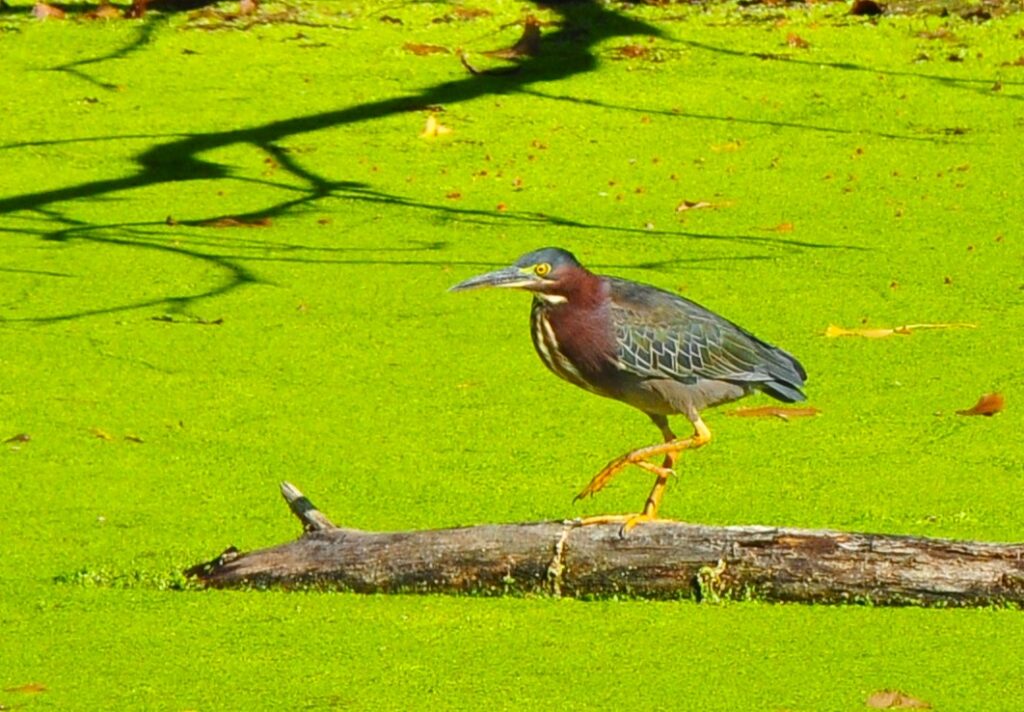
The diminutive green heron is another common summer resident. Although barely knee-high to its larger cousin, the green heron is also an effective fisher. Although it will sometimes stalk its prey, this heron much prefers to hunt from stationary perches such as low hanging branches, clumps of aquatic vegetation, or floating logs where it patiently waits for prey to come to it.
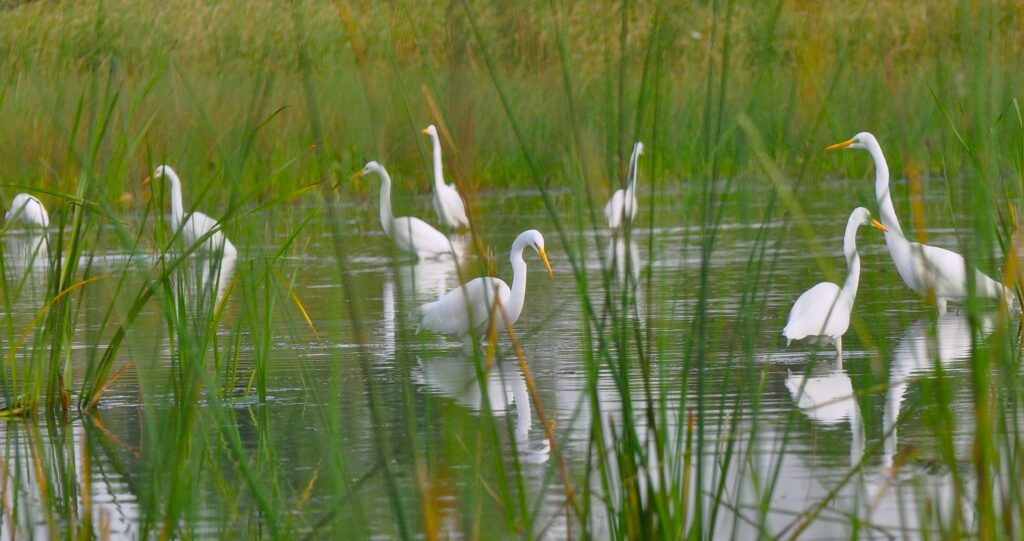
During late summer and continuing into early autumn, Iowa’s shallow water hunting grounds become inundated by an ever growing legion of southbound great egrets. Somewhat smaller than great blue herons, the egret’s snow white plumage makes it an easy to spot favorite of Iowa birders. Fond of conducting nighttime migrations, large numbers of traveling egrets may suddenly descend on local wetlands where their surprise, sunrise appearance never fails to thrill human observers.

 Craig Parker
 Ann Wolf
 Thomas Rinehart
 Susan Judkins Josten
 Rudi Roeslein
 Elyssa McFarland
 Mark Langgin
 Adam Janke
 Joe Henry
 Sue Wilkinson
 Tom Cope
 Kristin Ashenbrenner
 Joe Wilkinson
 Dr. Tammy Mildenstein
 Sean McMahon